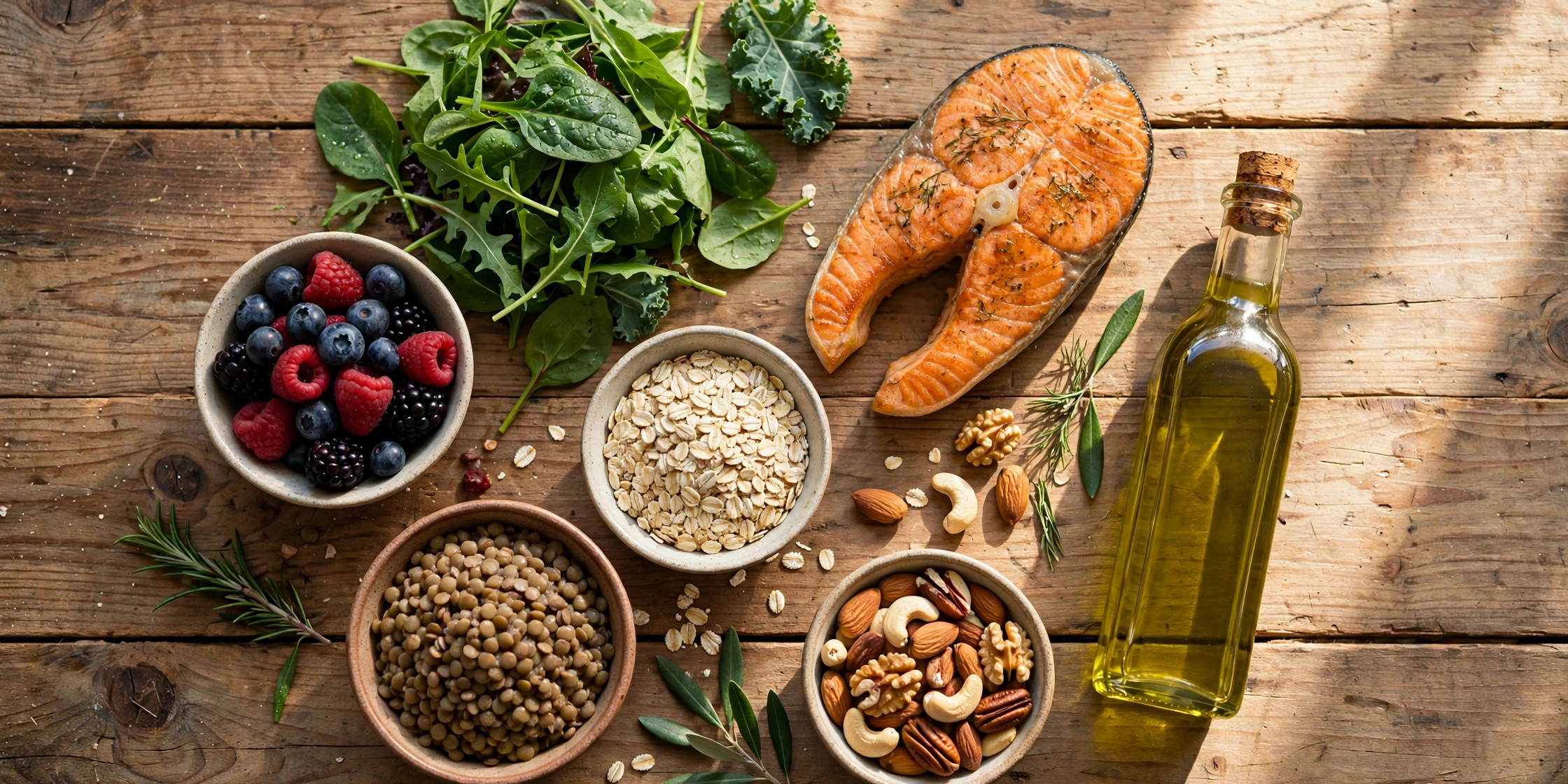
7 Heart-Healthy Foods Cardiologists Actually Recommend
Ask a cardiologist what to eat for your heart, and you probably won’t hear about exotic superfoods. You’ll hear about salmon, spinach, walnuts, oatmeal — ordinary foods with extraordinary evidence behind them. Cardiologists keep coming back to the same short list because these foods show up, again and again, in the dietary patterns linked to better cardiovascular outcomes.
That pattern has a name: the Mediterranean and DASH eating styles. Both emphasize fruits, vegetables, whole grains, legumes, nuts, fish, and unsaturated oils while limiting saturated fat, added sugars, and sodium. The American Heart Association’s 2021 dietary guidance builds its recommendations on exactly these foundations — plenty of fruits and vegetables, whole grains over refined ones, plant proteins like legumes and nuts, fish and seafood regularly, and liquid plant oils in place of solid animal fats.
What follows is a practical list of seven foods that fit that pattern — what each one brings to the table, what the evidence suggests, and how to actually eat it after 45.
1. Fatty fish: salmon, sardines, mackerel
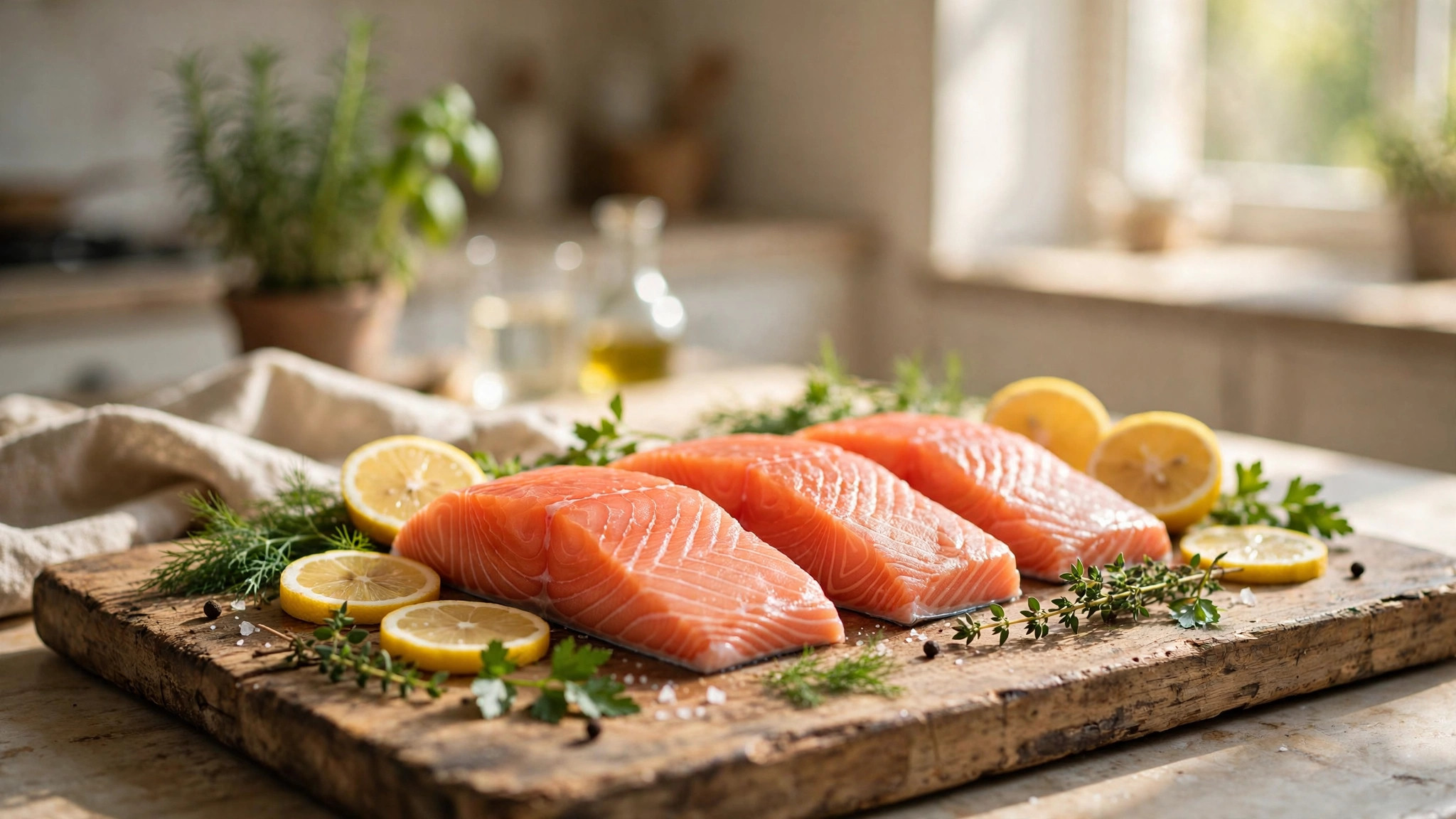
Why it’s on the list. Fatty fish are the richest food sources of EPA and DHA, the long-chain omega-3 fatty acids. The American Heart Association recommends eating fish — especially fish rich in omega-3s — twice a week (two 3.5-ounce servings of non-fried fish), based on evidence linking this habit to lower risk of heart failure, coronary heart disease, cardiac arrest, and ischemic stroke. Harvard Health notes that oily fish like salmon, mackerel, and sardines are among the top catches for omega-3s, and that the benefit appears strongest when fish replaces meats high in saturated fat.
How to eat it. Aim for two servings a week. That can be a fillet of baked salmon with dinner and a tin of sardines on whole-grain toast at lunch — sardines are inexpensive, shelf-stable, and, being small fish, are lower on the food chain. Bake, grill, or poach rather than fry. Canned salmon and sardines in water or olive oil count just as well as fresh.
2. Leafy greens: spinach, kale, arugula
Why they’re on the list. Leafy greens pack potassium, folate, fiber, and nitrates into very few calories — and they’re a cornerstone of both the DASH and Mediterranean patterns, which consistently rank among the best-supported dietary approaches for blood pressure and heart health. The AHA’s guidance calls for plenty of vegetables with variety, and leafy greens are one of the easiest ways to hit that target. Diets high in potassium are associated with healthier blood pressure, which is why the DASH pattern — rich in greens — was originally designed to lower it.
How to eat them. Add a large handful of spinach to scrambled eggs or soups (it wilts down to almost nothing), build salads on a base of arugula or mixed greens with olive oil dressing, or sauté kale with garlic. Frozen spinach works just as well as fresh and never goes bad in the freezer — a practical backup for days you don’t shop.
3. Berries: blueberries, strawberries, raspberries

Why they’re on the list. Berries deliver fiber, vitamin C, and anthocyanins — the pigments that give them their deep color and much of their antioxidant activity. The Mayo Clinic’s heart-healthy eating guidance highlights fruits rich in fiber and antioxidants, and large observational studies have linked higher berry intake with better vascular health. No single fruit is magic, but berries are among the most nutrient-dense fruits per calorie, which matters when appetites run smaller after 45.
How to eat them. Half a cup a day is a realistic target: on top of oatmeal or yogurt at breakfast, in a handful-as-snack, or blended into a smoothie. Frozen berries are picked at peak ripeness, cost less than fresh out of season, and keep their nutrients well — keep a bag in the freezer year-round.
4. Nuts: walnuts and almonds
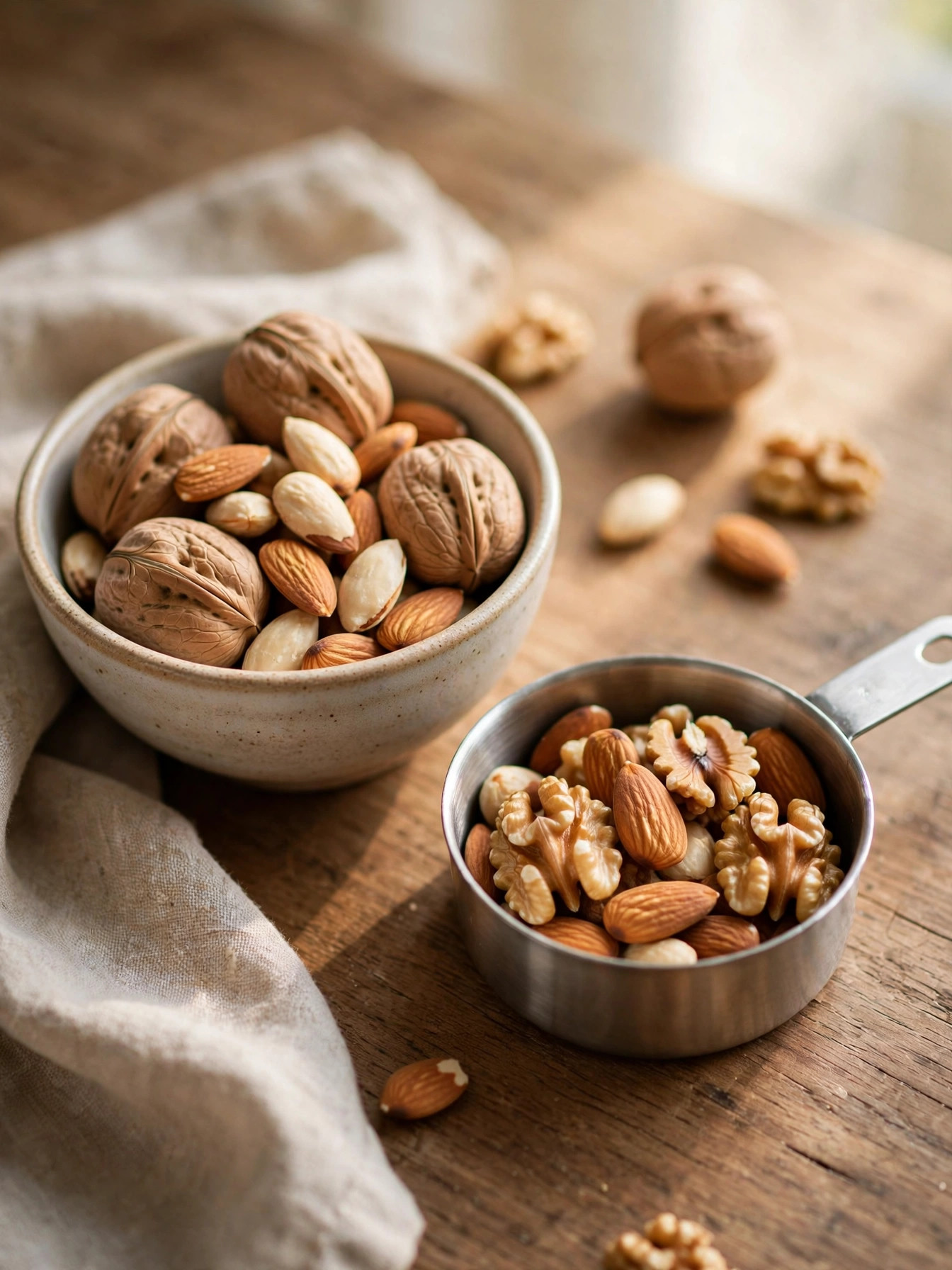
Why they’re on the list. Walnuts are one of the few plant foods rich in ALA, a plant-based omega-3 fat, while almonds bring vitamin E, magnesium, and fiber. Mayo Clinic’s low-cholesterol guidance names almonds, walnuts, and pistachios as sources of unsaturated fats that can help improve cholesterol when they replace saturated fats in the diet. A Mayo Clinic cardiologist has specifically named almonds and walnuts as hallmarks of the Mediterranean pattern for heart health. Portions matter, though: nuts are calorie-dense, and their benefit is tied to eating them instead of less healthy snacks, not on top of them.
How to eat them. A small handful — about 1 ounce (28 grams) — most days: on salads, stirred into oatmeal, or as an afternoon snack in place of chips or cookies. Buy unsalted. Pre-portion into small containers so the bag doesn’t become the portion.
5. Whole grains: oats and oat bran
Why they’re on the list. Oats are the standout whole grain for heart health because of beta-glucan, a type of soluble fiber. The Mayo Clinic’s dietary guidance lists oats and oat bran first among fiber-rich foods for lowering LDL cholesterol: soluble fiber binds cholesterol in the digestive system and helps carry it out of the body. The AHA likewise recommends choosing foods made mostly with whole grains rather than refined grains. Swapping refined grains for whole grains is also linked to better blood sugar control — relevant because diabetes and heart disease travel together.
How to eat them. A bowl of oatmeal at breakfast is the classic, but variety helps: use rolled oats in smoothies or homemade granola, try oat bran as a hot cereal, or choose whole-grain bread and brown rice in place of white versions. Check labels — “whole grain” should be the first ingredient.
6. Legumes: lentils, beans, chickpeas
Why they’re on the list. Lentils, beans, and chickpeas deliver soluble fiber, plant protein, potassium, and folate with almost no saturated fat. Both the AHA’s guidance and Mayo Clinic’s Mediterranean-style advice name legumes as preferred protein sources. Because they’re high in fiber and protein, legumes are also filling — which helps with the weight management that supports heart health. They’re also among the cheapest foods on this list, which makes them a practical staple, not a luxury.
How to eat them. Add lentils to soups and stews (red lentils cook in about 15 minutes with no soaking), toss chickpeas or black beans into salads, or swap half the meat in chili or tacos for beans. Rinse canned beans to wash away much of the added sodium. If beans bother your digestion, start with small portions and increase gradually — your gut adapts.
7. Extra-virgin olive oil
Why it’s on the list. Olive oil is the primary fat of the Mediterranean diet, and Mayo Clinic’s guidance explains why: as a monounsaturated fat, it can help reduce LDL (“bad”) cholesterol levels when used in place of saturated fats like butter or lard. The AHA’s 2021 guidance similarly recommends using liquid plant oils rather than tropical oils, butter, or partially hydrogenated fats. Extra-virgin olive oil also contains polyphenols — plant compounds with antioxidant activity — though its main, best-supported benefit remains the fat swap it enables.
How to use it. Use olive oil for salad dressings, drizzling over vegetables, and sautéing at moderate heat; reserve high-heat frying for refined oils if you prefer. The heart benefit comes from replacing butter, margarine, and coconut oil — simply adding olive oil on top of an unchanged diet won’t do it.
Putting it together: a sample heart-healthy day
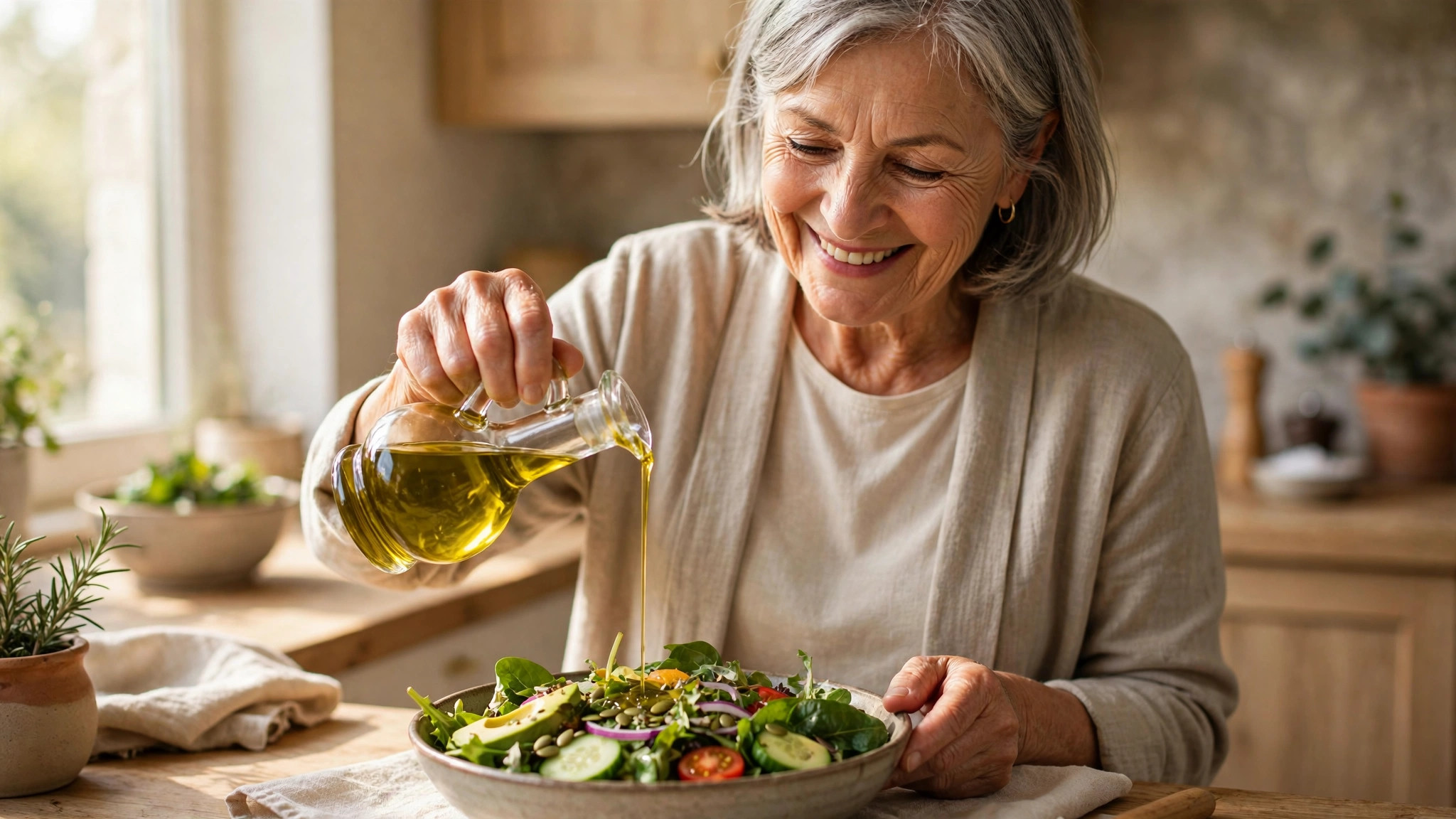
Lists are only useful if they turn into meals. Here’s what a day built from these seven foods can look like — nothing exotic, nothing that takes an hour:
- Breakfast: oatmeal topped with blueberries and a spoonful of chopped walnuts, drizzled with a little extra-virgin olive oil instead of butter
- Lunch: large arugula and spinach salad with chickpeas, sardines, tomatoes, and olive oil–lemon dressing
- Snack: an apple and a small handful of almonds
- Dinner: baked salmon with sautéed kale and lentils
Notice the pattern: every meal includes at least one item from the list, fiber shows up constantly, and saturated fat barely appears. That’s the Mediterranean/DASH approach in everyday form.
When to see a doctor
Food is powerful support for heart health, but it’s not a substitute for medical care. See your doctor promptly — and don’t delay — if you experience chest pain or pressure, pain spreading to the arm, neck, or jaw, sudden shortness of breath, or an unusually fast or irregular heartbeat. Also book a checkup to discuss your personal heart risk: ask about blood pressure, cholesterol numbers, blood sugar, and whether your diet, medications, or family history put you in a higher-risk group. If you take blood thinners or have kidney disease, talk to your doctor before making big changes to foods high in vitamin K (like leafy greens) or potassium.
Related reading: High Cholesterol After 50: What Your Numbers Actually Mean
Sources
- American Heart Association — 2021 Dietary Guidance to Improve Cardiovascular Health (summary): https://www.guidelinecentral.com/guideline/1226131/
- Harvard Health Publishing — “New guidelines detail what you should eat for a healthy heart”: https://www.health.harvard.edu/heart-health/new-guidelines-detail-what-you-should-eat-for-a-healthy-heart
- American Heart Association scientific advisory on fish and omega-3s (via ScienceDaily): https://www.sciencedaily.com/releases/2018/05/180517081837.htm
- Harvard Health Publishing — “The story on fish and heart health”: https://www.health.harvard.edu/heart-health/the-story-on-fish-and-heart-health
- Mayo Clinic — Mediterranean diet and heart health (via Newswise): https://www.newswise.com/articles/mediterranean-diet-ingredients-for-a-heart-healthy-eating-approach
- Mayo Clinic News Network — “Heart-healthy diet for women” (Mediterranean diet guidance from a Mayo Clinic cardiologist): https://newsnetwork.mayoclinic.org/n7-mcnn/7bcc9724adf7b803/uploads/2018/01/MCM-Heart-healthy-diet-women-FINAL.pdf
This article is for general information only and is not medical advice. Talk to your doctor or a dietitian about changes to your diet.