Best Mixing Bowls for Seniors: Non-Slip, Lightweight Bowls
A mixing bowl is the most ordinary tool in the kitchen — and one of the most frustrating when your hands are not what they used to be. A heavy ceramic bowl slides across the counter the moment you start whisking. A smooth glass bowl is impossible to hold with one hand while you pour with the other.
The best mixing bowls for seniors are built around three ideas: they stay put, they are light enough to lift when full, and they give your hands something to hold on to. This guide compares the main materials and shares the techniques that make mixing safer.
Why ordinary bowls frustrate older cooks
Most mixing bowls were designed for young, strong hands. They assume you can grip a smooth, round surface with one hand while stirring hard with the other, and lift a full bowl with your wrists. After 60, several of those assumptions start to fail.
Slipping is the biggest problem. A bowl with a smooth, flat base has almost nothing holding it to the counter. The harder you stir, the more it moves — and the more it moves, the harder you grip, which tires your hands faster. A bowl that slides off the edge can break or spill hot food.
Weight adds up fast. An empty ceramic or glass bowl may feel fine in the shop, but add two cups of batter or a salad for four and you are lifting several pounds with your wrists. The CDC estimates that more than 53 million U.S. adults have some form of arthritis, and hand arthritis commonly causes pain, stiffness, and a weaker grip. A bowl that is light when empty is not automatically light when full.
Grip is the third issue. Smooth rims and no handle force you into a pinch grip — thumb on one side, fingers on the other — which is exactly the grip that weakens first when the thumb joint is sore. A bowl with a handle or a pouring spout lets you use a whole-hand grip instead, which is stronger and less painful.
The good news: you do not need a specialty medical product — just a well-designed ordinary bowl, chosen with these three problems in mind.
Bowl materials compared
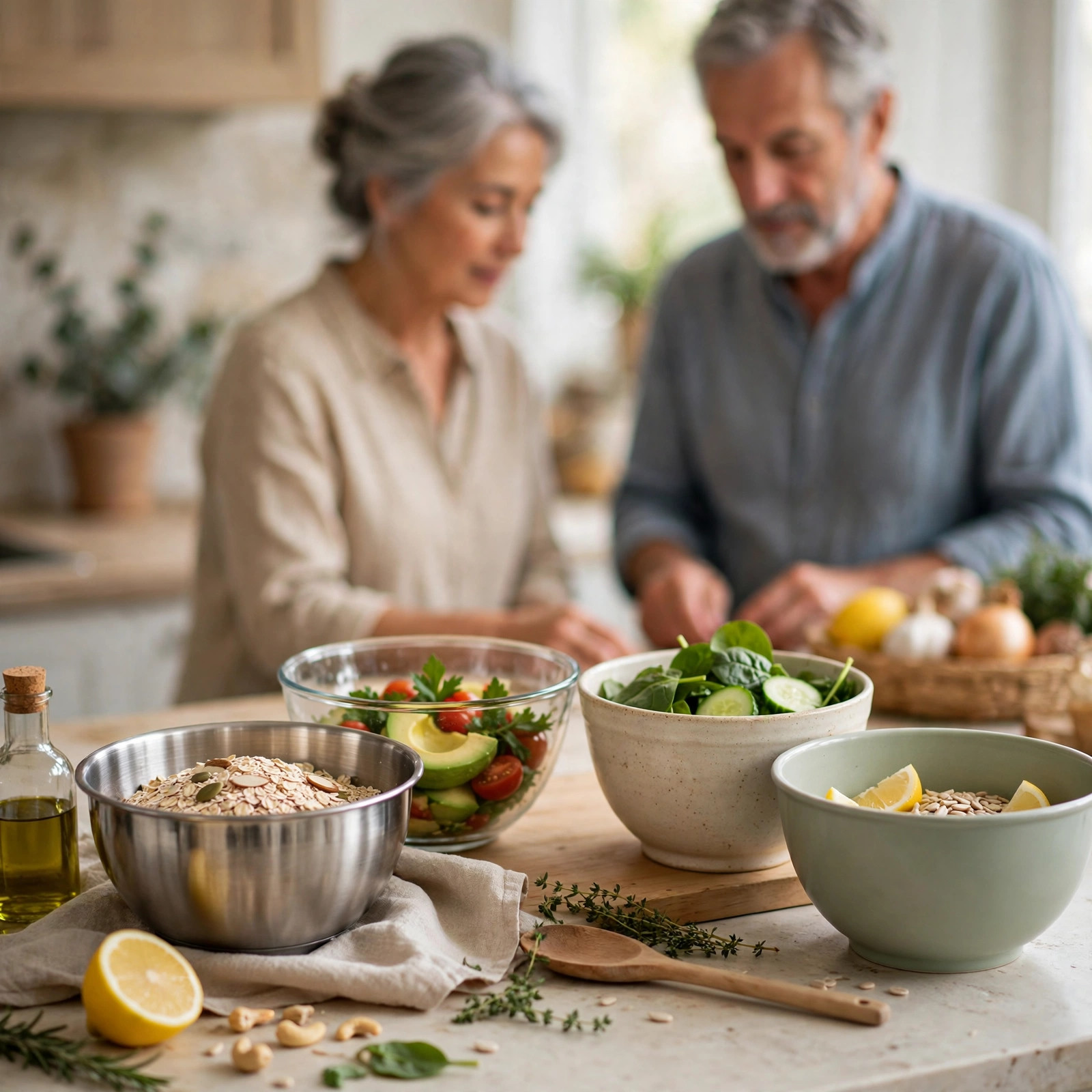
Every material has a trade-off. The right choice depends on what you cook most and whether slipping, weight, or grip bothers you most.
| Material | Weight | Grip and stability | Best for | Watch out for |
|---|---|---|---|---|
| Stainless steel | Light | Often sold with silicone non-slip bases and handles | Everyday mixing, whisking, salads | Can dent; noisy on the counter |
| Glass | Heavy | Smooth and slippery; steadied by its weight | Seeing batter; microwave use | Heavy when full; breaks if dropped |
| Ceramic / stoneware | Heaviest | Stays put through weight; usually no handle | Serving; gentle mixing | Very heavy when full; chips and cracks |
| Melamine / plastic | Lightest | Often textured, with non-slip rings | Everyday use, lighter tasks | Scratches over time; usually not for the microwave |
| Silicone | Very light | Flexible sides; collapsible sets save space | Small tasks, tight kitchens | Can flex and wobble while whisking |
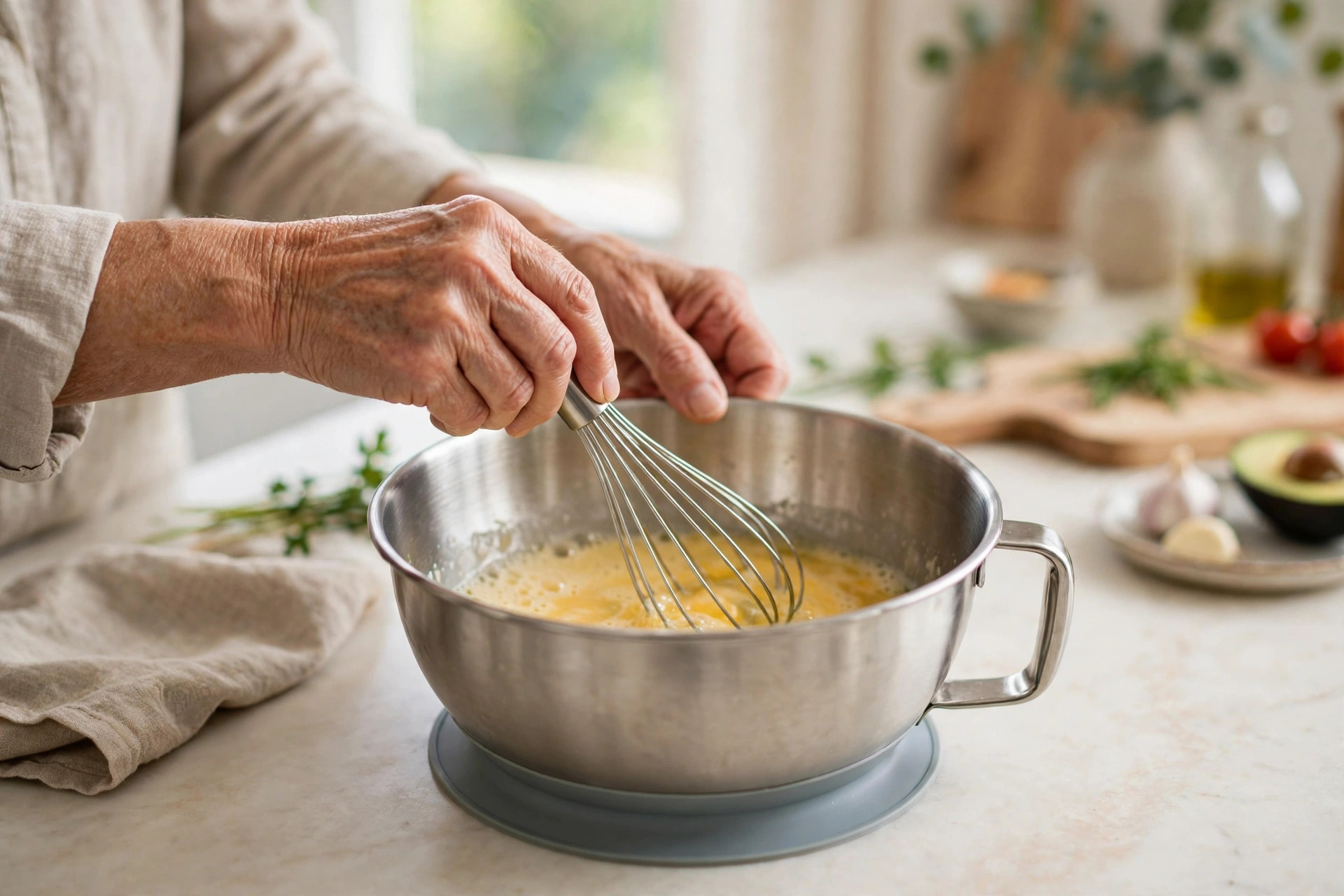
Stainless steel is the best all-rounder. It is light enough to lift when full, it does not break if dropped, and the better designs come with a silicone ring on the base and a handle.
Glass has one real advantage: you can see what you are doing. But glass is heavy, and that weight works against you twice — it is harder to lift, and far more dangerous if it falls. If you love glass, choose a smaller size for light jobs like whisking eggs.
Ceramic looks beautiful and stays put simply because it is heavy — and that weight is the problem: a full ceramic bowl can be the heaviest thing you lift in the kitchen. Reserve ceramic for serving.
Melamine and sturdy plastic are the lightest practical option. A large plastic bowl full of salad weighs far less than the same salad in glass or ceramic, and many designs include a non-slip base and a handle. The trade-off is durability — plastic scratches and stains, and most melamine should not go in the microwave.
Silicone bowls fold flat for storage, which helps in a small kitchen, and they are almost weightless. But the flexible sides can wobble under a whisk, so they suit gentle folding and small batches better than vigorous beating. Look for one with a rigid rim or a reinforced base.
What to look for when you buy
Check these five features before you buy.
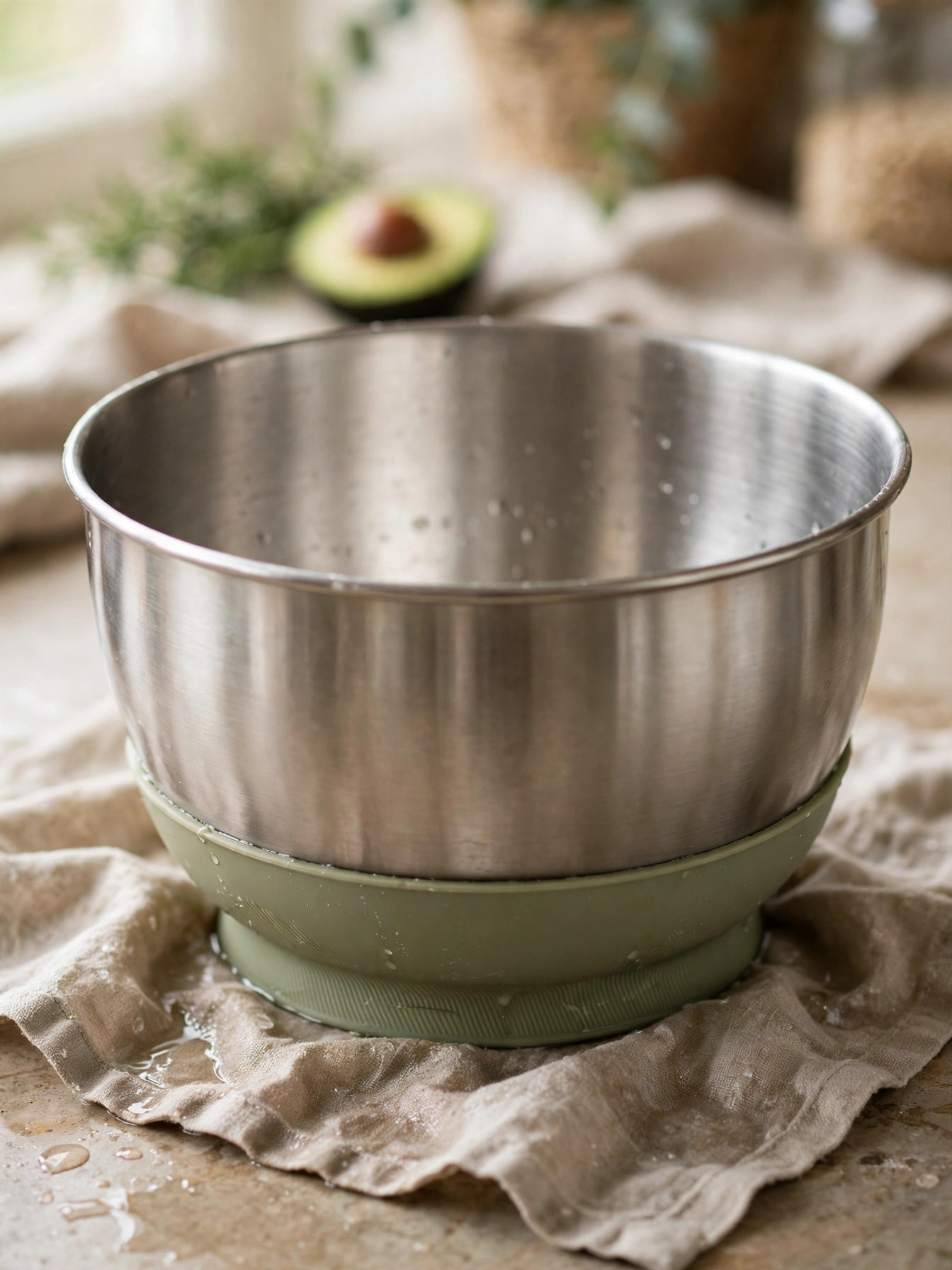
1. A non-slip base. This is the single most important feature. Look for a silicone ring, a rubberized bottom, or a suction-style base. Test it if you can: press the empty bowl on a counter and try to slide it sideways with one finger. If it moves easily, keep looking.
2. Handles and pouring spouts. A side handle turns a pinch grip into a whole-hand grip and gives you control when pouring. A spout lets you tip batter into a pan in a thin, controlled stream instead of wrestling a heavy bowl over the edge. Bowls with both are often sold as batter bowls.
3. Weight — tested when full, not empty. Pick the bowl up, then imagine it holding a litre of batter or a family-sized salad. A large steel or plastic bowl is usually manageable; the same size in glass or ceramic may not be. If you are choosing between two sizes, the lighter one you can lift comfortably is the better buy.
4. Size and sets. A nested set — commonly around 1.5, 3, and 5 quarts — covers most jobs: small for eggs or dressings, medium for mixing, large for salads and dough. Nested sets store as one unit, which saves shelf space. Avoid sets where the largest bowl is too wide to reach across, or too deep to scrape without straining your wrist.
5. Stability and shape. A wide, low base is more stable than a tall, narrow one, and a flat bottom sits more firmly than a rounded one. A textured or matte exterior is easier to hold than a glossy one, especially with damp hands. Extras worth having: measurement markings, a lid for leftovers, and a dishwasher-safe label.
Using bowls safely: small techniques, big difference
The right bowl helps, but technique keeps you safe — and these habits cost nothing.
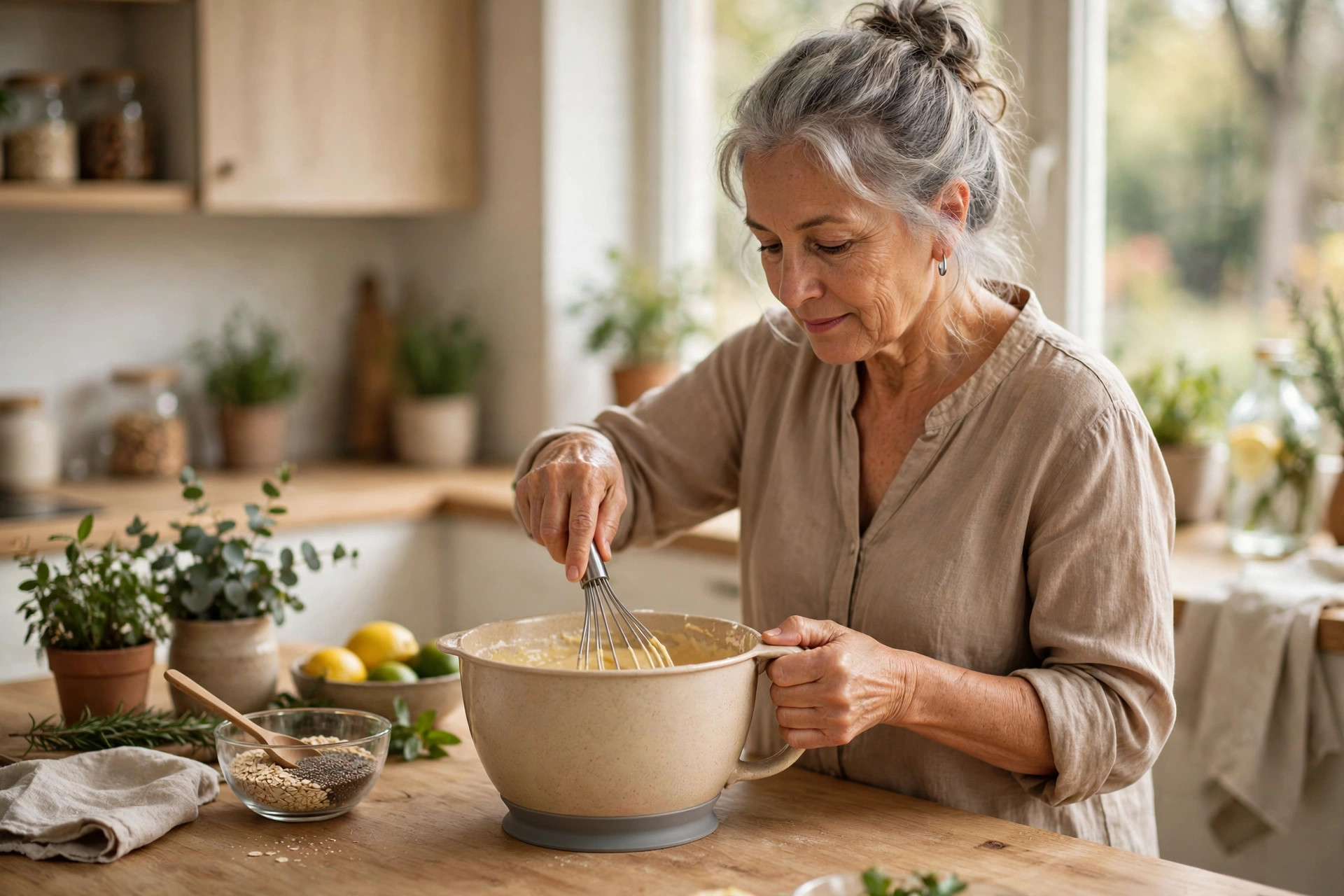
Anchor the bowl first. A damp cloth or a piece of damp paper towel under the bowl adds friction instantly and stops most sliding. A silicone baking mat or a non-slip shelf liner cut to size works even better. Anchor before you start mixing, not after the bowl has already moved.
Mix with one hand, rest the other. Tilt the bowl toward you and hold the handle, or brace it against your body with your forearm while your dominant hand stirs. Slow, wide circles strain your wrist less than fast, tight whisking. For heavy jobs like bread dough, mix in two smaller batches.
Slide, don’t lift. Move a full bowl across the counter by sliding it rather than picking it up. When you do need to lift it, use both hands and keep it close to your body. If a recipe calls for pouring batter into a pan, bring the pan to the bowl — or use a ladle — instead of lifting a heavy bowl over a hot oven.
Keep the counter dry. Wipe up splashes as you go — a wet counter is the main reason a bowl slides, and a slip risk for you. Keep a towel within reach.
Warm up your hands first. If your hands are stiff in the morning, run them under warm water for a minute or two before cooking, and do a few gentle fist-and-release movements. The NHS notes that osteoarthritis stiffness is often worse after rest and eases once you start moving.
Cleaning and storage
Choose dishwasher-safe bowls if you use a dishwasher, and check whether lids and silicone rings come off for cleaning — trapped moisture under a base ring can smell.
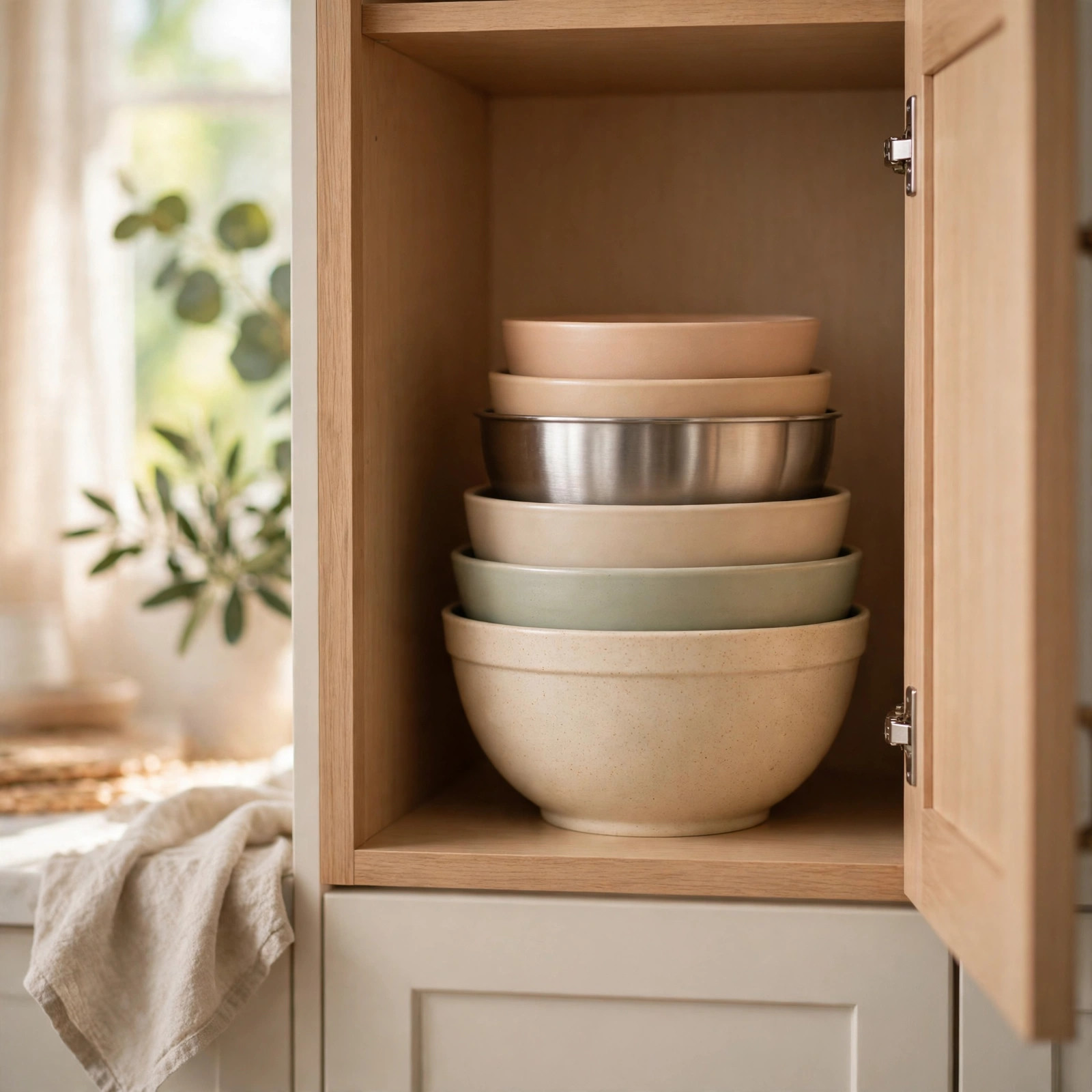
Store nested sets together, heaviest at the bottom. Keep everyday bowls at waist-to-shoulder height, not on a high shelf where you must reach and lift. Glass and ceramic need more care: stack them with a cloth between them to prevent chipping, and never stack a heavy bowl on top of a light one. Steel and plastic can simply nest.
When to see a doctor
A better bowl can make cooking easier, but it cannot fix a hand problem that needs medical attention. See your doctor if you notice any of the following:
- Hand or wrist pain that lasts more than a few weeks, or pain that wakes you at night
- Noticeable weakness — dropping cups or utensils more often than before
- Numbness, tingling, or pins and needles in your fingers or thumb
- Swelling, redness, or warmth in a finger or wrist joint
- Morning stiffness in your hands that lasts more than 30 minutes
- Fingers or thumbs that look different in shape
These symptoms can have many causes — osteoarthritis is the most common, but nerve problems such as carpal tunnel syndrome can also cause weakness and tingling, and inflammatory types of arthritis need different treatment. Cleveland Clinic notes that hand arthritis symptoms include joint pain, stiffness, swelling, and difficulty with everyday tasks. A clinician can identify the cause and suggest treatments, hand exercises, or a referral to an occupational therapist. Do not wait if a joint becomes suddenly hot, red, and swollen, or if you have a fever along with joint pain — seek care promptly.
The bottom line
The best mixing bowls for seniors are not the most expensive ones — they are the ones that stay put, weigh little, and give your hands a handle and a spout to work with. Start with a light steel or sturdy plastic bowl with a silicone non-slip base, and anchor every bowl with a damp cloth before you stir. Cooking should feel comfortable, not like a grip test.
Sources
- Centers for Disease Control and Prevention, “Arthritis Basics” — https://www.cdc.gov/arthritis/basics/index.html
- Mayo Clinic, “Osteoarthritis — Symptoms and Causes” — https://www.mayoclinic.org/diseases-conditions/osteoarthritis/symptoms-causes/syc-20351925
- NHS, “Osteoarthritis” — https://www.nhs.uk/conditions/osteoarthritis/
- Cleveland Clinic, “Arthritis in Hands” — https://my.clevelandclinic.org/health/diseases/arthritis-in-hands
This article is for general information only and is not medical advice. Talk to your doctor or a qualified health professional about your personal health needs before changing how you manage a health condition.