
7 Dangerous Medication Mistakes Seniors Make Every Day
If you are over 60, your medicine cabinet probably looks busier than it did at 40. That is normal — nearly 95% of Americans 65 and older have at least one chronic condition, and 80% have two or more. More conditions mean more prescriptions, and more prescriptions mean more room for small, everyday errors.
These errors matter more than most people realize. Older adults are seven times more likely than younger people to experience an adverse drug event serious enough to land them in the hospital — and about 80% of those complications are preventable. The good news is that the fixes are usually simple habits, not expensive products or complicated systems.
Below are the seven most common medication mistakes seniors make, each with the fix. None of this replaces your own doctor or pharmacist — it tells you exactly what to ask them.
1. Doubling up after a missed dose
The mistake: You find a pill still sitting in the morning slot at noon and think, “I’ll take two tonight to catch up.” It feels logical — but medicines are timed to keep a steady level in your body, and doubling can push that level higher than intended.
The safer habit: One missed dose is usually just a missed dose. For most medicines, taking a double dose to compensate is riskier than simply skipping one. The right move depends entirely on your specific drug: the patient information leaflet usually has a “missed dose” section, and your pharmacist can give you the answer for YOUR prescription in under a minute. If you miss doses often, a weekly pill organizer or a phone alarm is a better long-term fix than improvising catch-up doses.
2. Quitting because you “feel fine”
The mistake: Your blood pressure readings look good, your cholesterol numbers improved, so you decide the medicine has done its job and stop taking it. This is one of the most common — and most dangerous — medication errors in older adults.
Why it happens: Blood pressure and cholesterol medicines work silently. You don’t feel them doing anything, and you don’t feel the condition they control — high blood pressure has no symptoms until something goes wrong. Feeling fine usually means the medicine is doing exactly what it is supposed to do.
The safer habit: Never stop, skip, or change a prescription because your numbers look good — talk to your doctor first. The benefit of these medicines comes from staying the course; your doctor may adjust the dose or run follow-up tests, but that decision belongs in a clinic, not at the kitchen counter. If side effects or cost are the real reason you want to stop, say that out loud at your next visit — there are usually alternatives.
3. The grapefruit trap
The mistake: You take your morning statin or blood pressure pill with a glass of grapefruit juice, not knowing that this particular fruit can change how some medicines behave in your body.
What is actually happening: Many drugs are broken down in the small intestine by an enzyme called CYP3A4. Grapefruit juice can block that enzyme, so more of the drug enters the bloodstream than intended — the same pill, a stronger effect. The FDA has required some prescription and over-the-counter drugs to carry warnings against grapefruit while taking them, including some statin drugs for cholesterol and some drugs for high blood pressure. This does not apply to all statins or all blood pressure medicines — it is drug-specific.
The safer habit: Read the information leaflet that came with your medicine and look for any mention of grapefruit. If it warns against it, check juice labels too — many fruit juice blends contain grapefruit. Pomelos and Seville oranges (often used in marmalade) may have the same effect, according to the FDA’s consumer guidance. When in doubt, ask your pharmacist: “Does grapefruit interact with this prescription?” It is a question they answer every day.

4. Mixing alcohol with sleep meds, sedatives, or strong painkillers
The mistake: A glass of wine with dinner while you also take a sleep aid or a prescription pain medicine feels harmless — until it isn’t. Alcohol and these medicines both slow the nervous system, and the combination amplifies that effect: stronger drowsiness, slower breathing, and a higher risk of falls.
Why it hits harder after 60: Your body’s reaction to alcohol changes with age. According to the National Institute on Aging, some older people feel the effects of alcohol more strongly without drinking more than they used to, which makes falls and accidents more likely. The NIA also warns that alcohol used with some sleeping pills, pain pills, or anxiety medicines can be deadly.
The safer habit: Before any medicine — prescription, over-the-counter, or herbal — ask your doctor or pharmacist whether alcohol is safe with it. If you enjoy a drink, be specific about how much and how often; vague answers get vague advice.
5. Hiding pills from your own doctor
The mistake: You take an ibuprofen for your knees and a prescription blood thinner for your heart, but only mention the prescription at your checkup — because the ibuprofen is “just over the counter.” Or you take ginkgo, garlic, or ginseng supplements that your doctor has never heard about.
Why it matters: Over-the-counter does not mean interaction-free. NSAID pain relievers such as ibuprofen and naproxen pose a risk of bleeding, especially in the gastrointestinal tract, and Harvard Health notes that the risk of major bleeding problems increases with age — adding an NSAID on top of a blood thinner can compound that risk. Some herbal supplements, including ginkgo, garlic, and ginseng, may also affect how blood clots, which is why pharmacists flag them for people on anticoagulants.
The safer habit: Bring EVERY bottle to every visit — prescriptions, over-the-counter medicines, vitamins, and supplements. Or keep a single written list and show it to every clinician you see. Your doctor cannot keep you safe from interactions they don’t know about. There is no judgment in a full list; there is only information.

6. Storing pills in the bathroom
The mistake: The bathroom medicine cabinet feels like the obvious home for medicine — it is even named after it. But daily showers turn bathrooms into the warmest, steamiest room in the house, and most medicine labels ask for the opposite: a cool, dry place.
Why it matters: NHS pharmacy guidance says to keep medicines tightly closed in their original packaging, in a cool place, and explicitly warns against storing them somewhere warm. Heat and moisture can break some medicines down faster, which means they may not work as well — and expired or degraded medicines can in some cases do harm. A pill that loses strength quietly is a problem you cannot see.
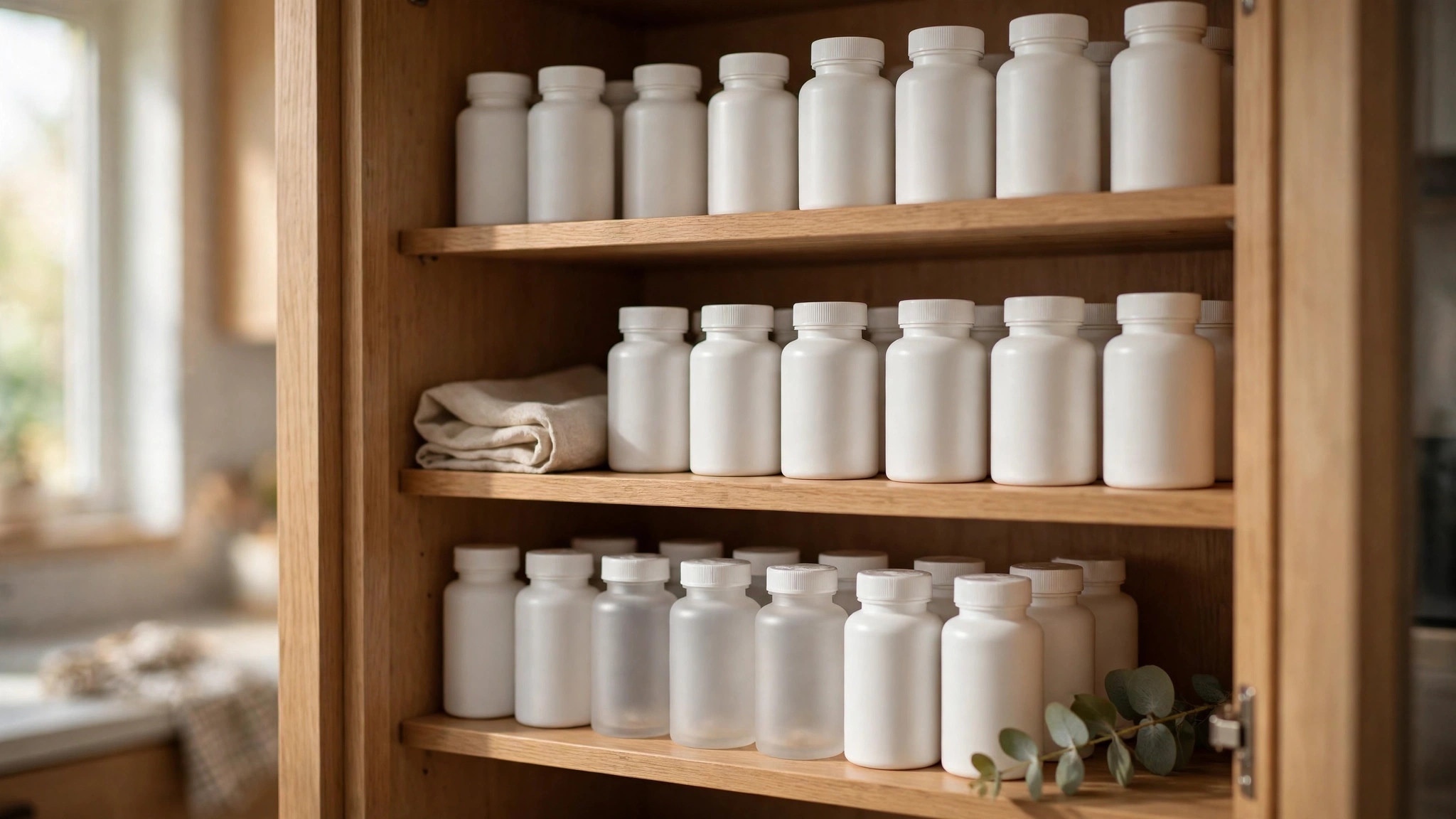
The safer habit: Move daily medicines to a cool, dry, dark spot — a bedroom drawer or a kitchen cabinet away from the stove and sink both work. Keep them in their original bottles with the labels intact so you always know what each pill is. Twice a year, check expiry dates and return anything expired or no longer used to a pharmacy for safe disposal — don’t flush them or throw them in household trash.
7. Taking pills dry or lying down
The mistake: You swallow a pill with a sip of coffee, or worse, take your nighttime medicine already lying in bed. If a tablet or capsule lingers in the esophagus, it can irritate the lining there — some pills are known to cause painful esophageal irritation if they don’t reach the stomach quickly.
The safer habit: Take pills with a full glass of water (not coffee or tea, which can affect how some medicines are absorbed), swallow one at a time, and stay upright for a while afterward so gravity does its job. Many pill labels and pharmacists recommend staying upright after swallowing; for some medications — certain bone medicines, for example — the label specifically says to stay upright for about 30 minutes with a full glass of water. If swallowing pills is difficult for you, ask your doctor or pharmacist about alternatives rather than crushing or splitting tablets on your own, since some pills must be taken whole.

The one habit that prevents most of these: the one-page medication list
If you do one thing after reading this, make it this. On a single page, write down:
- The name of every medicine and supplement you take — prescription, over-the-counter, vitamins, and herbals
- The dose and when you take it
- Who prescribed it and what it is for
- Your allergies
Keep one copy at home and one with you — in your wallet, purse, or phone. Show it to every clinician, including dentists and physical therapists, and update it whenever anything changes. A medication list is the simplest tool for catching duplicate prescriptions, dangerous interactions, and medicines you no longer need. It takes twenty minutes to write and pays for itself at every appointment.
When to see a doctor
Medication safety habits prevent problems — but some situations need a clinician promptly:
- Unusual or severe side effects after starting a new medicine (dizziness, confusion, unusual bruising or bleeding, swelling)
- Signs of an allergic reaction: rash, itching, swelling of the face or lips, trouble breathing
- You want to stop, skip, or change any prescription for any reason
- You missed several doses in a row and are unsure how to restart safely
- You take many medicines and have never had a full medication review — ask your doctor or pharmacist about one
The bottom line
None of these seven mistakes comes from carelessness — they come from habits that made sense before you needed five prescriptions and a supplement or two. The pattern behind almost every one is the same: your doctor and your pharmacist can only protect you from what they know about, and your medicine’s label can only help you if you read it. Slow down at the medicine cabinet, keep your list current, and when in doubt, call the pharmacist. That is what they are there for.
Sources
- U.S. Food and Drug Administration, “Grapefruit Juice and Some Drugs Don’t Mix” (consumer update; FDA source via drugs.com) — https://www.drugs.com/fda-consumer/grapefruit-juice-and-medicine-may-not-mix-208.html
- National Institute on Aging, “Facts About Aging and Alcohol” — https://www.nia.nih.gov/health/alcohol-misuse-or-alcohol-use-disorder/facts-about-aging-and-alcohol
- Harvard Health Publishing, “Medication perils” — https://www.health.harvard.edu/healthy-aging-and-longevity/medication-perils
- NHS (University Hospitals Birmingham), “Medicines advice” — https://www.uhb.nhs.uk/services/pharmacy/medicines-advice/
This article is for informational purposes only and is not medical advice. Talk to your clinician or pharmacist before changing anything about your medications.