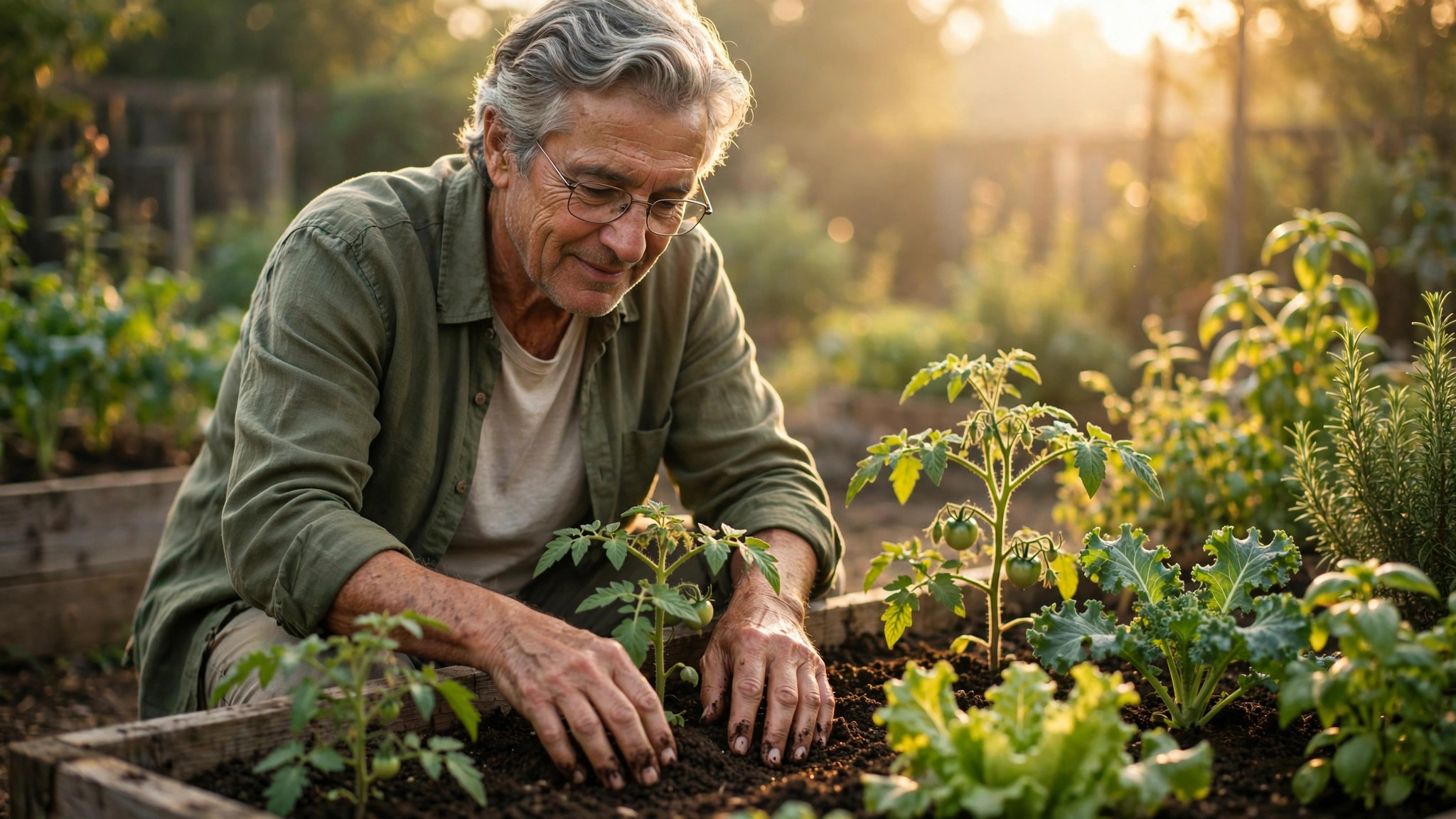
Gardening Benefits for Seniors: Body, Brain, and Mood After 60
Gardening is one of those rare activities that never feels like a chore and never feels like exercise — yet it quietly delivers both. For adults past 60, a regular hour in the garden does more than produce tomatoes: it gets the heart pumping, works muscles through their full range of motion, and gives the brain a steady stream of planning, problem-solving, and sensory engagement.
That combination is exactly why health experts pay attention to it. The CDC even lists gardening as a "multicomponent" physical activity — one that blends aerobic, muscle-strengthening, and balance work in a single session. This guide walks through what the evidence actually supports, where the claims get softer, and how to garden safely and comfortably as joints age and the sun gets less forgiving.
Real exercise, disguised as a hobby
Digging, raking, weeding, carrying watering cans, and squatting to plant seedlings all count as physical activity — and some of it is more vigorous than people expect. Researchers measuring energy expenditure in gardeners aged 63–86 found that tasks like building a vegetable bed registered as moderate-intensity exercise, roughly 3–4 METs, while lighter tasks such as transplanting seedlings came in lower (Park, Shoemaker & Haub; reviewed in Journal of Applied Gerontology).
Why does that matter? Because the CDC’s guidance for adults 65 and older calls for:
- At least 150 minutes a week of moderate-intensity aerobic activity
- Muscle-strengthening activities on at least 2 days a week
- Balance-improving activities regularly
Gardening touches all three: sustained bed-digging and raking raise the heart rate, lifting bags of compost and pushing a wheelbarrow loads the muscles, and reaching, squatting, and stepping over low borders all challenge balance. The CDC specifically names gardening among activities that combine multiple types of physical activity in one session.
This does not mean the garden replaces everything. If your knees no longer allow squatting or your back protests at heavy digging, the aerobic portion of your week may still need walking or swimming — a point worth making because "gardening is exercise" can lull people into thinking one gentle activity covers it all. Think of the garden as a genuine, counted contributor to your active minutes, ideally alongside other movement you enjoy.
Good for the brain — with honest limits
Gardeners often say the garden keeps them sharp, and researchers have noticed the same pattern: observational studies have linked regular gardening with better cognitive test scores and lower reported rates of cognitive complaints in older adults. The plausible mechanisms make sense — gardening involves sequencing and planning (what to plant where, when to water), sensory stimulation (smell, touch, color), and learning new information (pest problems, soil health).
Here is the honest framing: these are associations, not proof that gardening prevents dementia. People who garden regularly also tend to be more physically active and socially engaged in general, and studies cannot fully separate those factors. No credible source claims that gardening protects against Alzheimer’s disease.
What we can say with confidence is that the brain thrives on exactly the kind of engaged, purposeful activity a garden provides — planning, noticing, adjusting — and that staying mentally active is one of the sensible, low-risk habits in any healthy-aging toolkit. Combined with the established physical-activity benefits, the cognitive upside is a reasonable bonus rather than a promised outcome.
Good for mood, especially when shared
This is where the evidence feels strongest to the people living it. Observational research has repeatedly associated gardening with lower symptoms of depression and anxiety and higher reported well-being in older adults. Again, the studies are mostly observational — happier people may simply garden more — but the direction of the association is consistent across reviews.
The social dimension probably explains a good share of it. Community gardens, allotment plots, and garden clubs create regular, low-pressure contact with other people — a natural antidote to the isolation that can settle in after retirement. If loneliness has been weighing on you, a shared garden plot is one of the gentlest ways back into a weekly routine with other humans around.
Sun and heat: the part gardeners over 60 must respect
Here is the trade-off of an outdoor hobby: the same sun that ripens the tomatoes is harder on aging bodies. The National Institute on Aging is blunt about this — older adults have a tougher time dealing with heat and humidity, and it does not take extreme temperatures to put them at risk for heat-related illness. Age-related changes in circulation and sweat glands, chronic conditions, and common medications (including some blood-pressure and allergy drugs) can all reduce heat tolerance.
Practical, NIA-backed precautions for the garden:
- Garden in the cool hours. Do the heavy work early in the morning or in the late afternoon; water plants then, too — it also reduces evaporation.
- Hydrate on a schedule, not by thirst. Keep water within arm’s reach and drink regularly. Avoid alcohol before or during gardening in the heat.
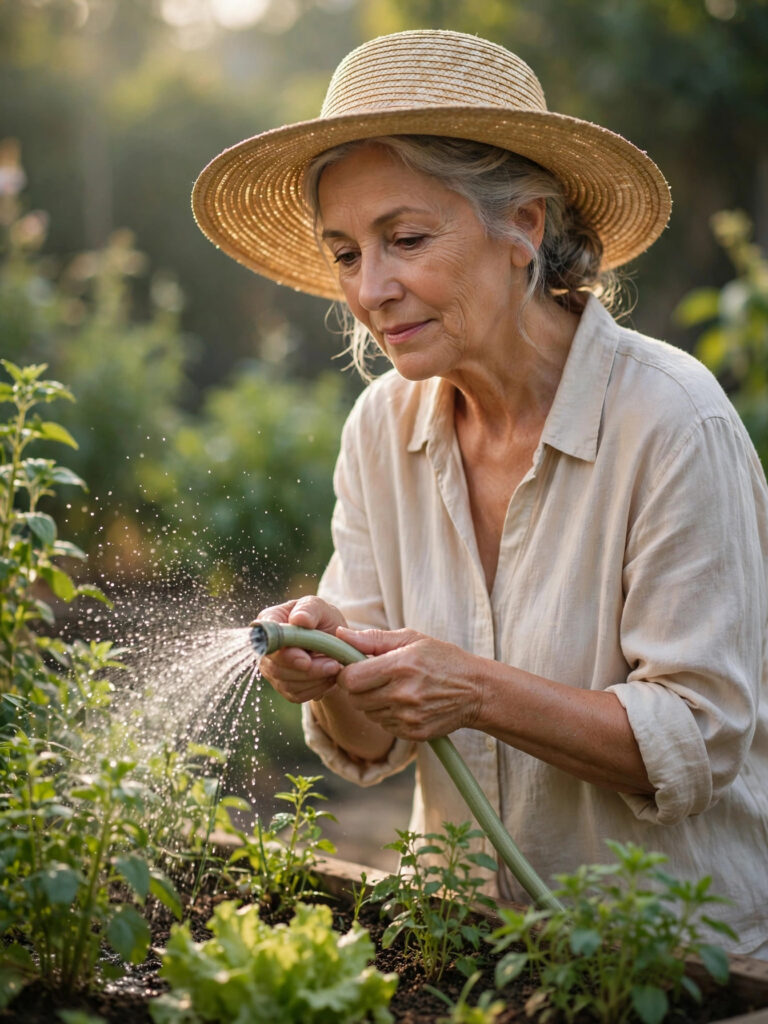
- Wear the armor. Broad-spectrum sunscreen (SPF 15 or higher, reapplied through the day), a wide-brimmed hat, sunglasses, and lightweight, loose, light-colored clothing.
- Ask your doctor about medications. Some prescriptions increase sun sensitivity or overheating risk — the NIA specifically flags this.
- Know the warning signs. Headache, confusion, dizziness, or nausea during hot-weather activity can signal heat-related illness. Move to shade or air-conditioning, sip water, and cool down with a cool cloth. If symptoms are more than mild — or if someone seems confused or stops sweating — treat it as urgent and seek medical help.
A useful rhythm: two shorter sessions (morning and evening) beat one long midday shift in summer. The plants prefer it too.
Making the garden joint-friendly
Stiff knees, an aching back, and arthritic hands end more gardening careers than lack of interest does — which is a shame, because most of the fixes are simple. The Arthritis Foundation’s gardening guidance centers on one idea: bring the garden up to you instead of bending down to it.
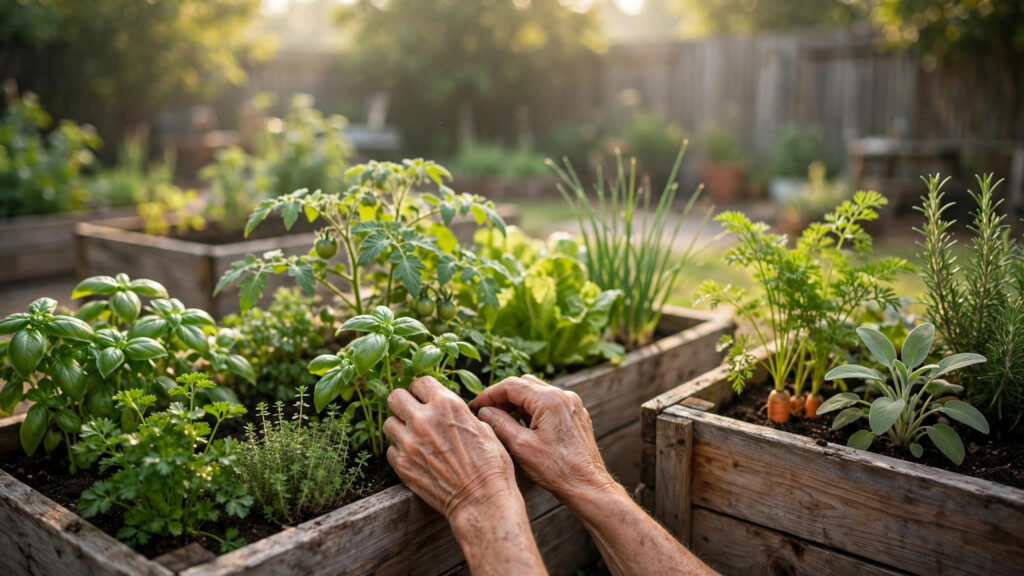
- Raise the beds. Waist-height raised beds or elevated planters eliminate most bending and kneeling. Containers on sturdy tables or stands work the same way for patios and balconies.
- Sit when you can. A garden kneeler that flips into a bench, or a simple sturdy stool, keeps you at plant level without the painful trip back up.
- Upgrade the grip. Tools with enlarged, cushioned, or ergonomic handles are easier on arthritic hands; long-handled tools let you weed and cultivate while standing. Keep blades sharp — dull tools demand far more force.
- Lighten the loads. Use a small cart or two-wheeled wagon instead of a heavy wheelbarrow, choose lightweight pots, and fill only what you can comfortably carry.
- Let the big joints work. The Arthritis Foundation advises using palms, forearms, or elbows rather than fingers for lifting where possible, bending at the knees, and keeping loads close to the body.
- Pace yourself. Alternate heavy and light tasks, change positions often, and take real breaks — arthritis pain builds when joints don’t get rest.
One more practical tip from the same guidance: dampen the soil before weeding. Weeds pull out of moist earth with a fraction of the effort, and your wrists will notice the difference.
Getting started safely after 60
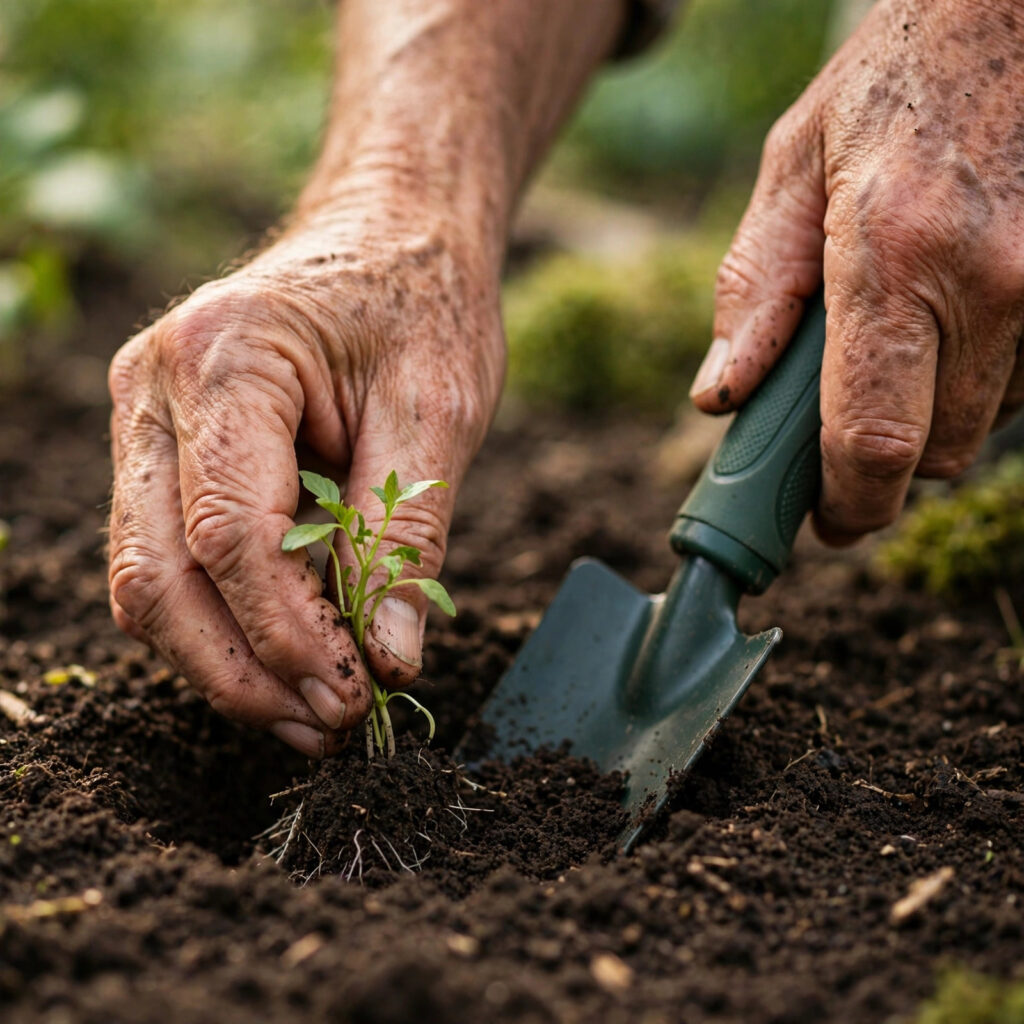
If you are returning to gardening after years away — or starting fresh — keep the first season deliberately small:
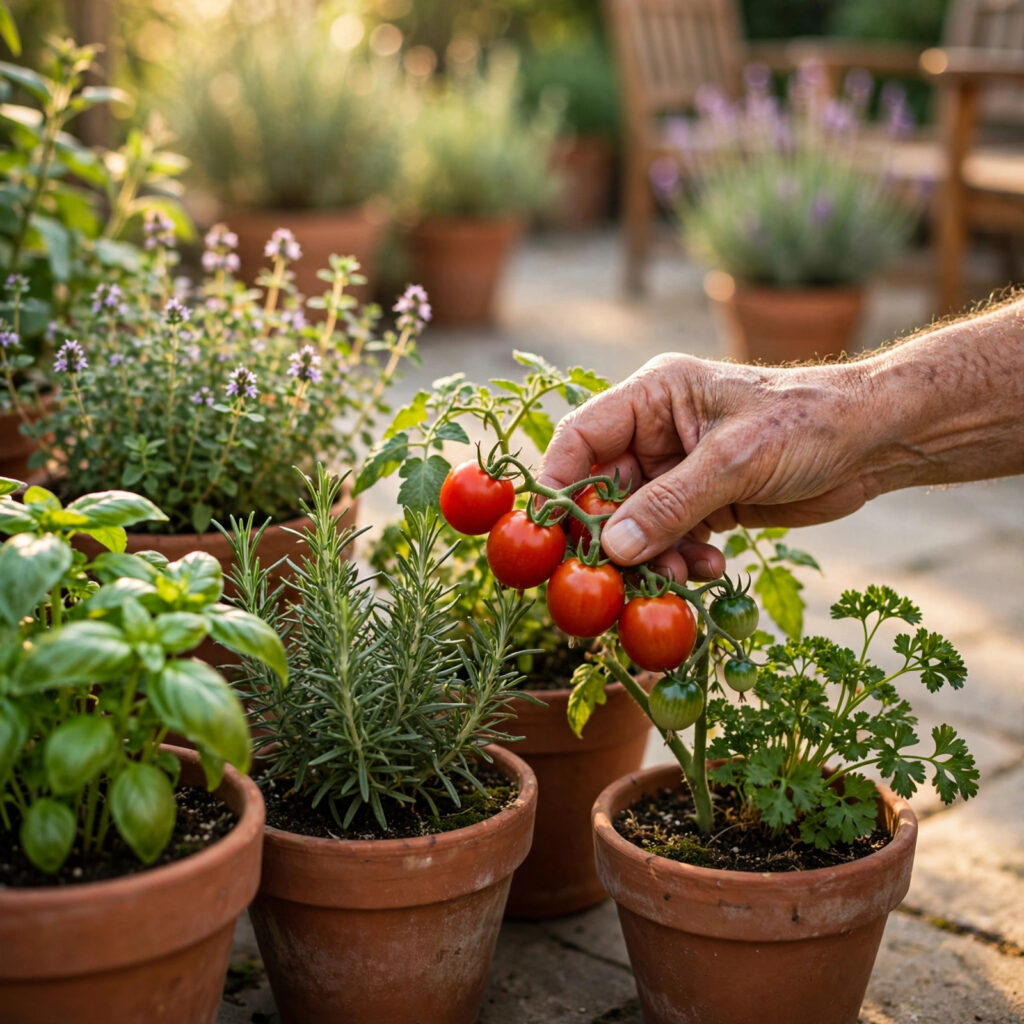
- Start with containers or one raised bed. A 4×4-foot bed or a few large pots of herbs and cherry tomatoes teaches you the rhythm without overwhelming your schedule or your back.
- Choose easy wins. Herbs (basil, mint, rosemary), lettuce, cherry tomatoes, marigolds, and lavender are forgiving for beginners and generous with results.
- Set a watering routine. Morning watering is best; a simple drip line or soaker hose on a timer removes the heaviest daily chore entirely.
- Wear gloves, always. Beyond blisters, gloves protect against soil-borne infections, thorns, and insect stings — small risks that matter more with thinner aging skin.
- Mind your footing. Keep paths wide, level, and clear of hoses and tools. Wear closed, sturdy shoes with good grip — flip-flops and garden beds are a bad combination.
- Check your tetanus vaccination. Soil work means cuts and scrapes; if your tetanus booster is more than 10 years old, ask your doctor about updating it.
When to see a doctor
Gardening is gentle, but it is still physical activity in the sun — check in with a clinician if:
- You have chest pain, unusual shortness of breath, or dizziness during or after gardening
- A joint swells, locks, or stays painful for more than a few days after garden work
- You develop signs of heat-related illness (headache, confusion, nausea, rapid pulse) that don’t ease quickly with cooling and fluids
- You take medications and aren’t sure whether they affect sun sensitivity or heat tolerance
- You have heart disease, uncontrolled blood pressure, diabetes, or osteoporosis and are starting a more active gardening routine
And as the NIA advises: headache, confusion, dizziness, or nausea in hot weather warrant a prompt medical opinion — don’t try to tough it out.
The bottom line
Gardening earns its reputation honestly on the physical side — it is recognized, moderate-intensity, whole-body activity that can genuinely contribute to the 150 active minutes a week older adults need. Its benefits for mood are consistently observed and make intuitive sense, especially when the garden is shared. For the brain, the evidence is promising but observational — think "good for an engaged mind," not dementia prevention.
The formula that works after 60: garden in the cool hours, raise the beds, sharpen the tools, protect yourself from the sun, and pace the work. Do that, and the garden gives back far more than it asks.
Sources
- Centers for Disease Control and Prevention, "What Counts as Physical Activity for Older Adults" — gardening listed as a multicomponent activity — https://www.cdc.gov/physical-activity-basics/adding-older-adults/what-counts.html
- Centers for Disease Control and Prevention, "Older Adult Activity: An Overview" — 150 minutes moderate-intensity activity weekly, plus muscle-strengthening and balance — http://www.cdc.gov/physical-activity-basics/guidelines/older-adults.html
- Arthritis Foundation, "Gardening With Arthritis: Preventing Joint Pain" — raised beds, joint-friendly tools, posture, pacing — https://www.arthritis.org/health-wellness/healthy-living/daily-living/life-hacks-tips/gardening-arthritis-joint-pain
- National Institute on Aging, "Hot Weather Safety for Older Adults" — heat-illness risk, sunscreen SPF 15+, hydration, medication check, warning signs — https://nia.nih.gov/health/safety/hot-weather-safety-older-adults
- Park S.-A., Shoemaker C.A. & Haub M., "Gardening Activities and Physical Health Among Older Adults: A Review of the Evidence," Journal of Applied Gerontology (CDC Stacks author manuscript) — gardening tasks measured at low-to-moderate intensity (1.6–3.6 METs) — https://stacks.cdc.gov/view/cdc/31658/cdc_31658_DS1.pdf
This article is for informational purposes only and is not a substitute for professional medical advice. Always talk to your doctor before starting a new exercise routine.