Volunteering and Brain Health After 60: What One Landmark Trial Found
Most of us think of volunteering as something generous we do for other people. A landmark study out of Baltimore suggests the favor may run both ways — especially for the aging brain.
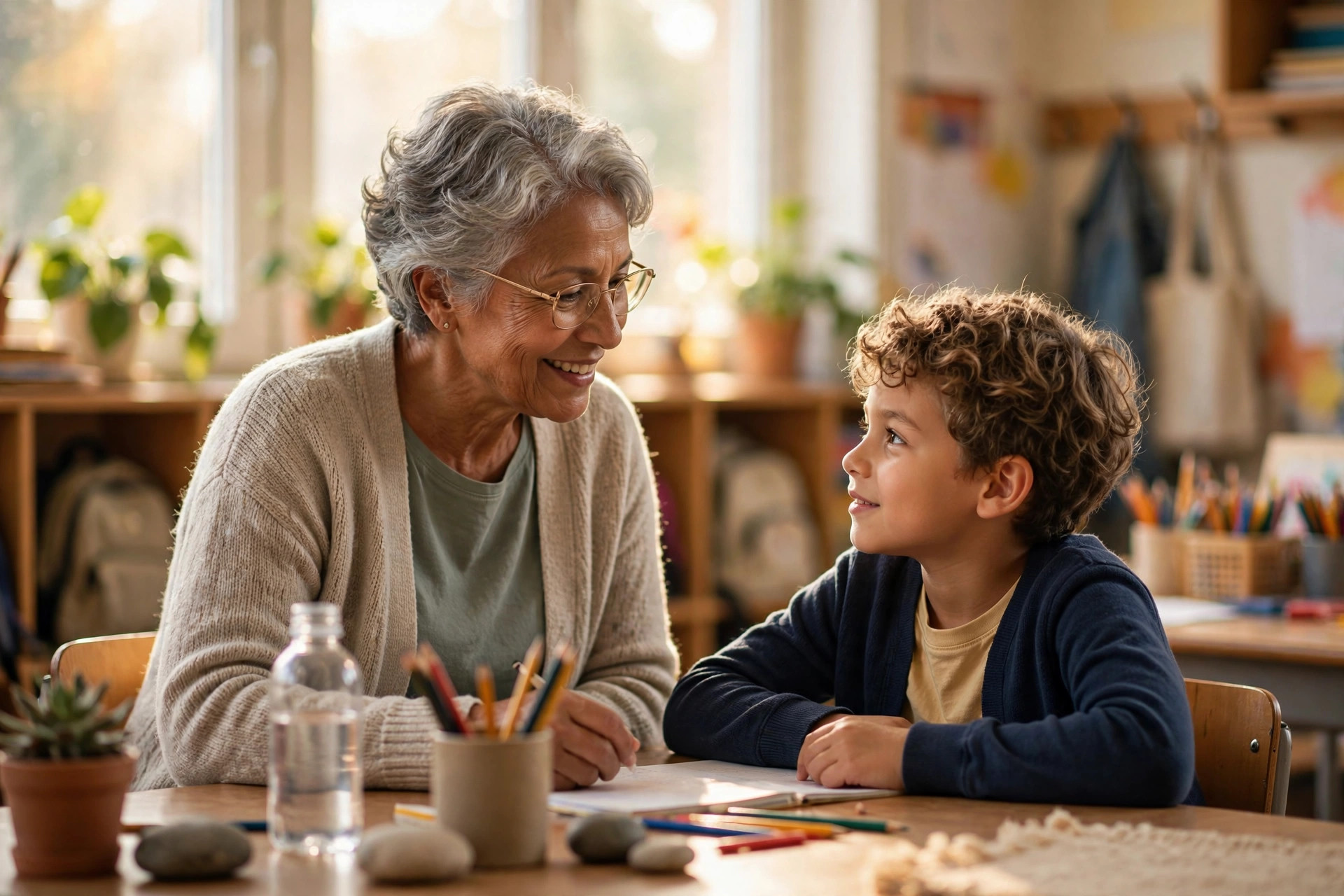
In the mid-2010s, researchers at the Johns Hopkins Bloomberg School of Public Health ran a randomized controlled trial — the gold-standard design in medical research — to test whether volunteering in elementary schools could support brain health in older adults. The program, called the Baltimore Experience Corps, assigned adults in their 60s and beyond to work as mentors and tutors in elementary-school classrooms. The results, measured with MRI brain scans and memory tests over two years, were striking enough to make headlines: the brains of the volunteers actually grew in regions involved in memory.
Before you call the local school and sign up, a reality check: this was one trial, with 111 people, in one American city. It is promising — but it is not proof that volunteering prevents dementia, and it should not be read as a prescription. Still, the findings are genuinely encouraging, and they fit into a larger pattern of evidence linking an engaged social life with healthier aging. Here’s what the researchers found, what it does and doesn’t mean, and how to get started if the idea appeals to you.
The trial: Baltimore Experience Corps
The study was led by Michelle Carlson, a professor at the Johns Hopkins Bloomberg School of Public Health. Her team recruited 111 adults with an average age of 67.2, all in good health, and randomly assigned them to one of two groups: 58 joined the volunteering program, working as mentors and tutors with children in elementary schools, while 53 formed a control group that did not take part.
Every participant received MRI brain scans at enrollment and again after 12 and 24 months, alongside memory and cognitive testing. Random assignment matters here: because volunteers weren’t simply self-selected, the trial is better evidence than a study that just observes people who already volunteer — those people may already be healthier or more socially connected to begin with.

What the brain scans showed
The headline finding, published by Carlson and colleagues in Alzheimer’s & Dementia in 2015 (DOI: 10.1016/j.jalz.2014.12.005), concerned brain volume — specifically in the cortex and hippocampus, regions central to memory. These areas typically shrink with age. What the scans revealed:
- Men in the volunteering program showed a 0.7–1.6% increase in cortical and hippocampal volume over two years — while men in the control group showed the expected age-related decline.
- Women in the program showed more modest gains (+0.3–0.54%) compared with roughly 1% decline among women in the control group.
- Importantly, larger volume gains tracked with larger improvements on the memory tests — suggesting the brain changes and the thinking changes were connected, not coincidental.
Those are modest percentages, but context matters: the comparison point isn’t just "a little better" — it’s growth where decline was expected. Normal aging steadily trims volume from these memory-related regions, so even a small reversal of direction is notable.
The thinking-speed finding
A second line of results focused on how participants’ minds performed, not just how their brains looked. The research team found that the most engaged volunteers — those who participated at the highest levels — showed improved cognitive performance on a sensitive processing-speed measure at 24 months. Men also showed dose-dependent gains at the 12-month mark, meaning the more they participated, the more their scores improved (PubMed 31950167).
Processing speed — how quickly the mind takes in and responds to information — is one of the first cognitive abilities to slow with age. It’s also deeply practical: it underpins reaction time, reading fluency, and the ability to juggle tasks in daily life. The fact that benefits appeared strongest in the most engaged participants strengthens the case that the volunteering itself, rather than some other factor, was doing the work.
Why might volunteering help the brain?
The researchers didn’t test one single mechanism, but several plausible explanations fit together:
- Mental exercise. Tutoring a child demands sustained attention, memory, patience, and problem-solving — the kind of complex, novel mental work that researchers believe keeps cognitive circuits active.
- Physical activity. Getting out of the house, commuting to a school, and being on your feet in a classroom adds gentle, regular movement to the day. Movement and brain health are strongly linked.
- Social connection. Meaningful, regular interaction with children, teachers, and fellow volunteers counters the isolation that becomes more common with age — and social isolation is itself associated with faster cognitive decline. (See also: the documented health effects of loneliness after 60).
- Purpose. Having a reason to get up in the morning that goes beyond personal routine — being needed by someone — is consistently linked in research to better mental health and healthier aging.
None of these is exotic. Together, they describe a package: novelty, challenge, movement, connection, and meaning — delivered through an ordinary school week.
What the wider evidence says
The Baltimore trial doesn’t stand alone. Long-term observational research from the Health and Retirement Study — a large US study following thousands of older adults over time — has linked formal volunteering to better working memory and a lower risk of cognitive decline (Proulx et al. 2018; Gupta 2018; Infurna et al. 2016).
Observational studies like these come with a built-in caveat: they can’t fully rule out that healthier, sharper people are simply more likely to volunteer in the first place. That’s precisely what makes the Baltimore trial valuable — its randomized design means the volunteering group and the control group started out comparable, so the differences at 24 months are much more likely to reflect the program itself.
Put together, the picture is consistent and hopeful: an engaged, socially connected, mentally active life is associated with a healthier aging brain. Volunteering appears to be one accessible way to get there — but the evidence is early, the trial was small and local, and no one should treat volunteering as a substitute for medical care or a way to ward off dementia.
How to start volunteering after 60
If the research resonates, here’s how to begin — practical and low-pressure:
Start small. Many programs need only a few hours a week. The Baltimore volunteers participated regularly over an extended period; consistency seems to matter more than heroic commitment.
Play to your strengths. Retired teachers aren’t the only useful volunteers. Reading aloud to young children, helping with basic math, assisting in after-school programs, or sharing a career story all count — and many roles involve learning something new, which is itself good mental exercise.
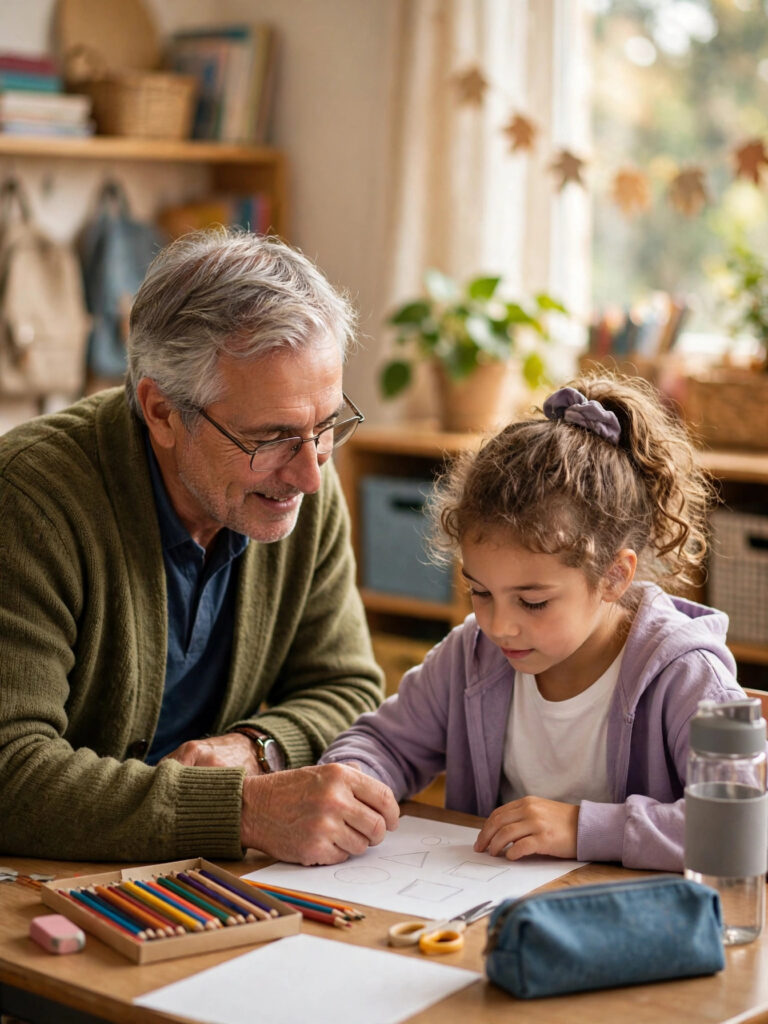
Look for structured programs. The Experience Corps model has expanded to other US cities since the Baltimore trial. Elsewhere, good starting points include local schools, libraries, museums, hospitals, food banks, and community centers. Senior centers and municipal volunteer offices often maintain lists of openings suited to older adults.
Protect your energy. The goal is sustainable engagement, not exhaustion. Set a weekly ceiling, keep one full day off if you like, and treat it like any other commitment — with the option to step back if it stops feeling rewarding. Burnout helps no one’s brain.

Make it social. Programs where you volunteer alongside peers — rather than alone — add the social layer that may be part of the benefit. Ask what team-based roles exist before signing up.

When to see a doctor
Volunteering supports well-being, but it is not medical treatment. Talk to a clinician if you notice:
- Memory lapses that are getting worse, more frequent, or starting to interfere with daily life (see: memory after 60 — what’s normal and what’s a warning sign)
- New difficulty following conversations, handling finances, or finding your way in familiar places
- Persistent low mood, withdrawal from people you care about, or loss of interest in activities you used to enjoy
- A change in sleep, appetite, or energy that doesn’t resolve within a few weeks
Early evaluation matters: many causes of memory problems are treatable, and a doctor can distinguish what’s normal aging from what needs attention. Building mentally active habits — like the habits linked to lower dementia risk — complements, never replaces, proper medical care.
The bottom line
One carefully run trial found that older adults who tutored children in Baltimore elementary schools showed measurable brain-volume gains and better memory scores over two years — growth where decline was expected. Broader long-term studies point in the same hopeful direction. That’s real evidence, and it’s worth taking seriously — but it’s not a guarantee and not a prescription. What it is: one more good reason to stay engaged, connected, and useful after 60, and a genuinely hopeful story about what an ordinary week of giving back might give back to you.
Sources
- Carlson M.C. et al., "Impact of the Baltimore Experience Corps Trial on cortical and hippocampal volumes," Alzheimer’s & Dementia, 2015 — DOI: 10.1016/j.jalz.2014.12.005 (via ScienceDaily summary: https://www.sciencedaily.com/releases/2015/04/150414100826.htm)
- PubMed 31950167 — cognitive outcomes from the Baltimore Experience Corps trial: https://pubmed.ncbi.nlm.nih.gov/31950167/
- Proulx C.M. et al. (2018), Gupta (2018), Infurna F.J. et al. (2016) — volunteering and cognitive health in the Health and Retirement Study (reviewed in https://pmc.ncbi.nlm.nih.gov/articles/PMC7742708/)
- National Institute on Aging, "Cognitive Health and Older Adults" — https://www.nia.nih.gov/health/brain-health/cognitive-health-and-older-adults
- CDC, "About Brain Health" — https://www.cdc.gov/brain-health/about/
This article is for informational purposes only and is not a substitute for professional medical advice. Talk to your doctor about any concerns with your memory or thinking.