Eating Alone After 60: Simple Meals and Staying Nourished
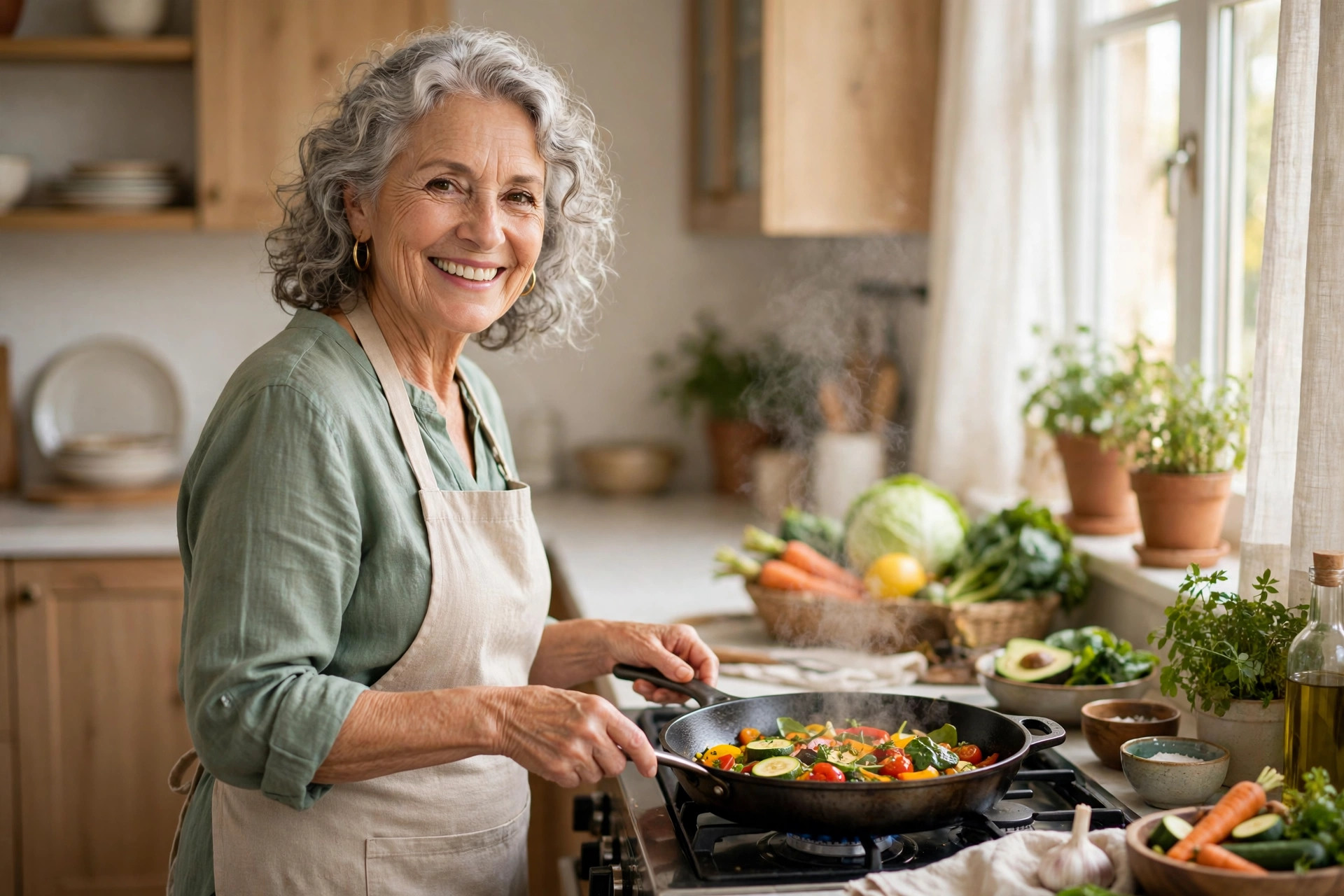
Cooking for one sounds simple. Fewer mouths, smaller pots, less washing up. But for many people over 60, eating alone quietly becomes one of the biggest risks to good nutrition — not because they don’t know what healthy food is, but because the motivation to cook a proper meal for just yourself slowly fades away.
Lunch gets skipped because nobody is waiting at the table. Dinner becomes toast and tea, eaten standing in the kitchen. Over months the meals get smaller, plainer, and less nourishing. This article is about stopping that slow slide — with simple one-person meals, a freezer that does the heavy lifting, and a few habits that make cooking for one feel worth the effort again.
As an Amazon Associate, we earn from qualifying purchases. The product below is one we recommend for cooking for one — it may help with the batch-cooking habit described in this article.
Why eating alone quietly erodes nutrition
Eating is a social habit as much as a biological one. For decades, most of us cooked at set times because someone else was coming home or sitting down to dinner. Take the other person away — through widowhood, divorce, children moving out, or simply living alone — and the structure around meals often goes with them.
The National Institute on Aging notes that appetite often declines with age, and that living alone can make it harder to eat well. Several things tend to happen at once:
- Appetite shrinks. Taste and smell may dull slightly with age, food tastes blander, and smaller meals feel like enough.
- Motivation drops. Cooking a full meal for one can feel like a lot of effort for a small reward — a sandwich is quicker, and nobody notices.
- Meals lose their timing. Without a shared schedule, breakfast drifts to 11 a.m., lunch disappears, and dinner becomes a snack in front of the television.
- Variety narrows. Many people who eat alone fall into a loop of the same five or six foods. The narrower the diet, the more likely something gets missed — often protein, fiber, or a vitamin like B12 or vitamin D.
The consequences are real — unintentional weight loss, weaker muscles, more fatigue, and a slower recovery from illness — but the fix is practical: make good food easy, and make mealtimes matter again.
The tea-and-toast trap
Ask a dietitian what pattern worries them most in older adults living alone, and many will describe the same thing: tea and toast. A cup of tea and a slice of toast for breakfast. A cup of tea and a biscuit for lunch. Maybe soup from a packet in the evening.
It is cheap, quick, and comforting — and it is almost entirely missing protein, fiber, and the vitamins and minerals your body needs to maintain muscle and bone. It is easy to slip into without noticing, so if your typical day includes more than one meal that is just a hot drink plus bread or biscuits, that is the first thing to change. You don’t need to overhaul your whole diet — you need one anchor at each meal.
The one-anchor rule: every meal should have one protein food on the plate. An egg at breakfast. A tin of sardines or a small piece of cheese at lunch. A piece of chicken, fish, beans, or tofu at dinner. Protein is what protects your muscles as you age, and it is the nutrient most often missing when people eat alone. Expert guidance suggests healthy older adults need roughly 1.0 to 1.2 grams of protein per kilogram of body weight a day, spread across meals rather than saved for dinner.
If you change nothing else this week, add one protein food to each meal. That single change lifts the whole day.
Simple one-person meals: breakfast, lunch, dinner
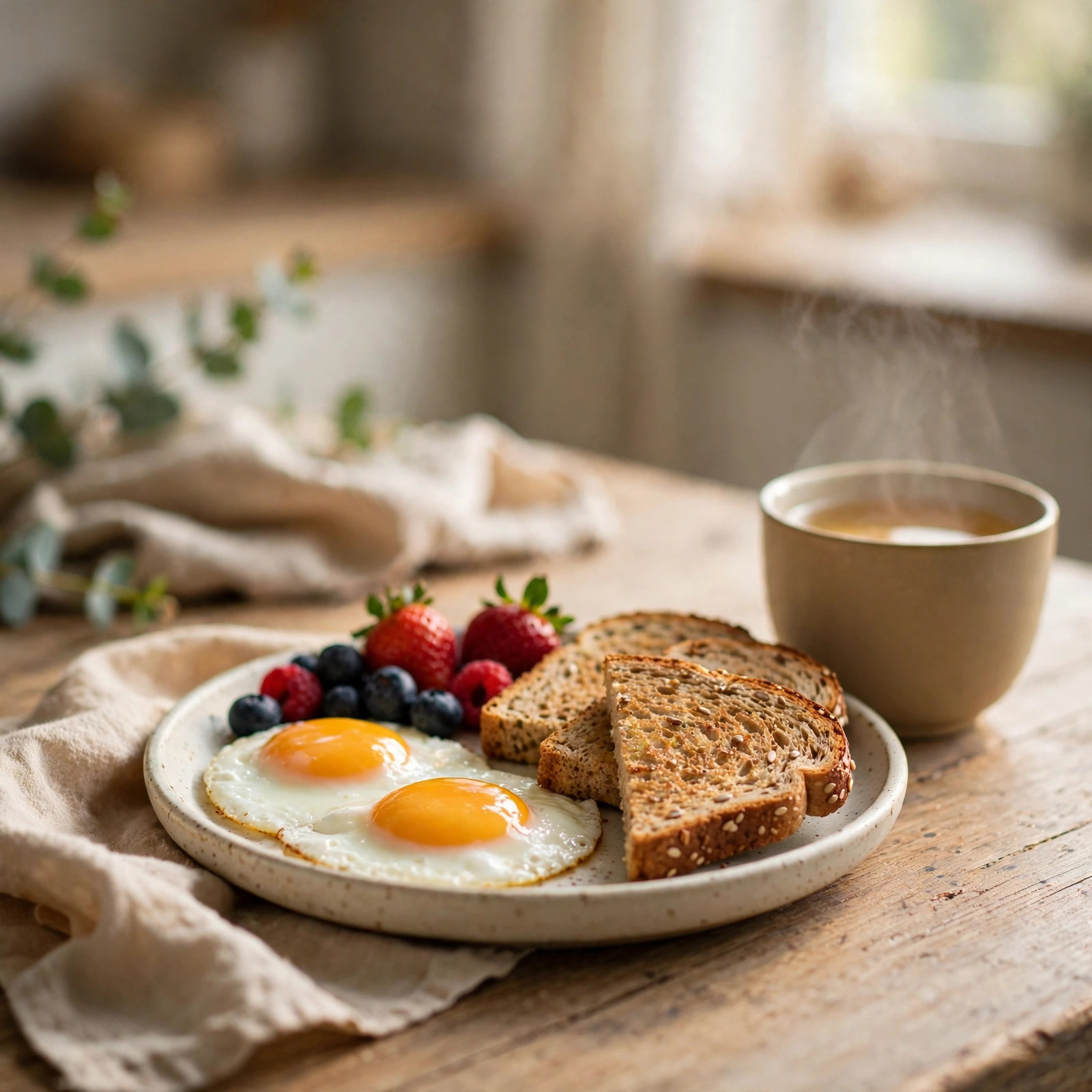
Cooking for one works best when meals are small, fast, and built from a few reliable ingredients. You don’t need recipes with fifteen steps. You need a short list of meals you can make without thinking.
Breakfast — protein plus something whole-grain or fruit:
- Scrambled or boiled eggs on whole-grain toast, with a piece of fruit.
- Greek yogurt with oatmeal and berries — no cooking at all.
- Peanut butter on whole-grain toast with a banana.
Lunch — put together in ten minutes:
- A tin of sardines, tuna, or salmon on toast, with a tomato or a handful of salad leaves.
- A bowl of lentil or bean soup — tinned or from the freezer — with bread and a piece of cheese.
Dinner — one plate, not a production:
- A piece of fish or chicken, frozen vegetables, and a microwaved potato or a small portion of rice.
- An omelet with cheese and whatever vegetables are in the fridge, plus toast.
Notice what these meals have in common: one protein food, one vegetable or fruit, and something starchy to make the meal feel finished. That is a complete meal, and it does not need to take more than fifteen minutes.
Batch cooking for one and freezer habits
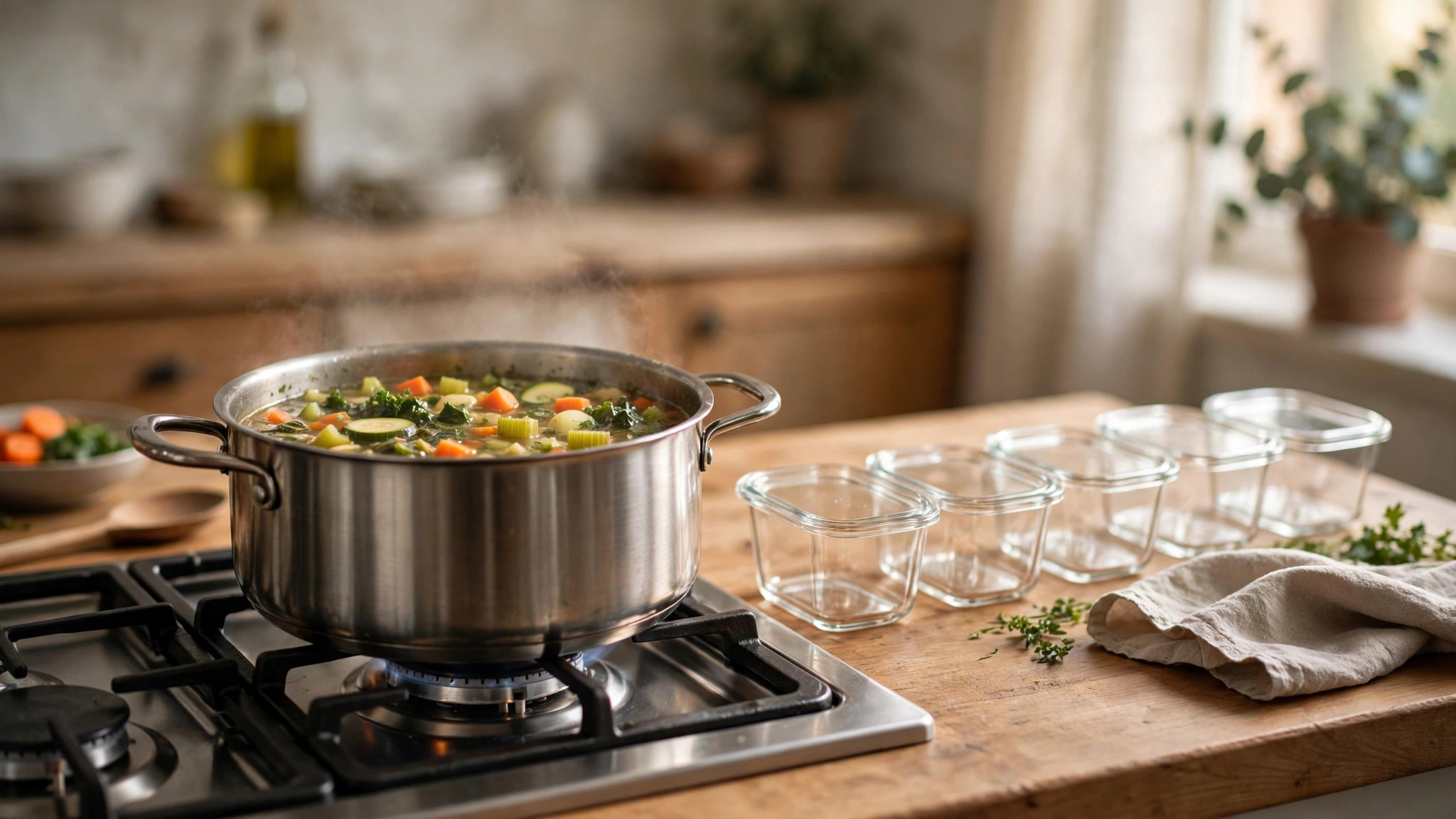
The single most useful habit for anyone cooking for one is this: cook a normal-sized pot, eat one portion, and freeze the rest in single servings.
One tool that makes batch cooking for one genuinely easy is a small slow cooker: cook once in the morning, eat well for two or three days, and freeze the rest in single portions.

1. Crock-Pot 4-Quart Manual Slow Cooker (SCV400-B)
One dial. No apps, no menus, no learning curve – just turn it and come home to dinner.
Most recipes make four portions. Instead of halving everything, cook the full amount. Eat one portion tonight and freeze three. After a few weeks, your freezer becomes a personal menu — soup, stew, pasta sauce, and curry, all ready in five minutes. On a tired evening, the choice is no longer “cook a meal or eat toast” — it is “heat up a portion of soup or eat toast.” The soup usually wins.
How to make it work:
- Freeze in single portions. Use small containers or freezer bags, and label each one with the dish and the date. A mystery container from six months ago is food nobody eats.
- Pick freezer-friendly dishes. Soups, stews, casseroles, curries, and pasta sauces freeze well. Cooked rice and pasta freeze well too, in single portions.
- Set a cooking day. Pick one morning a week to make one big pot of something. That is one cooking session that covers three or four dinners.
Frozen vegetables and pantry staples
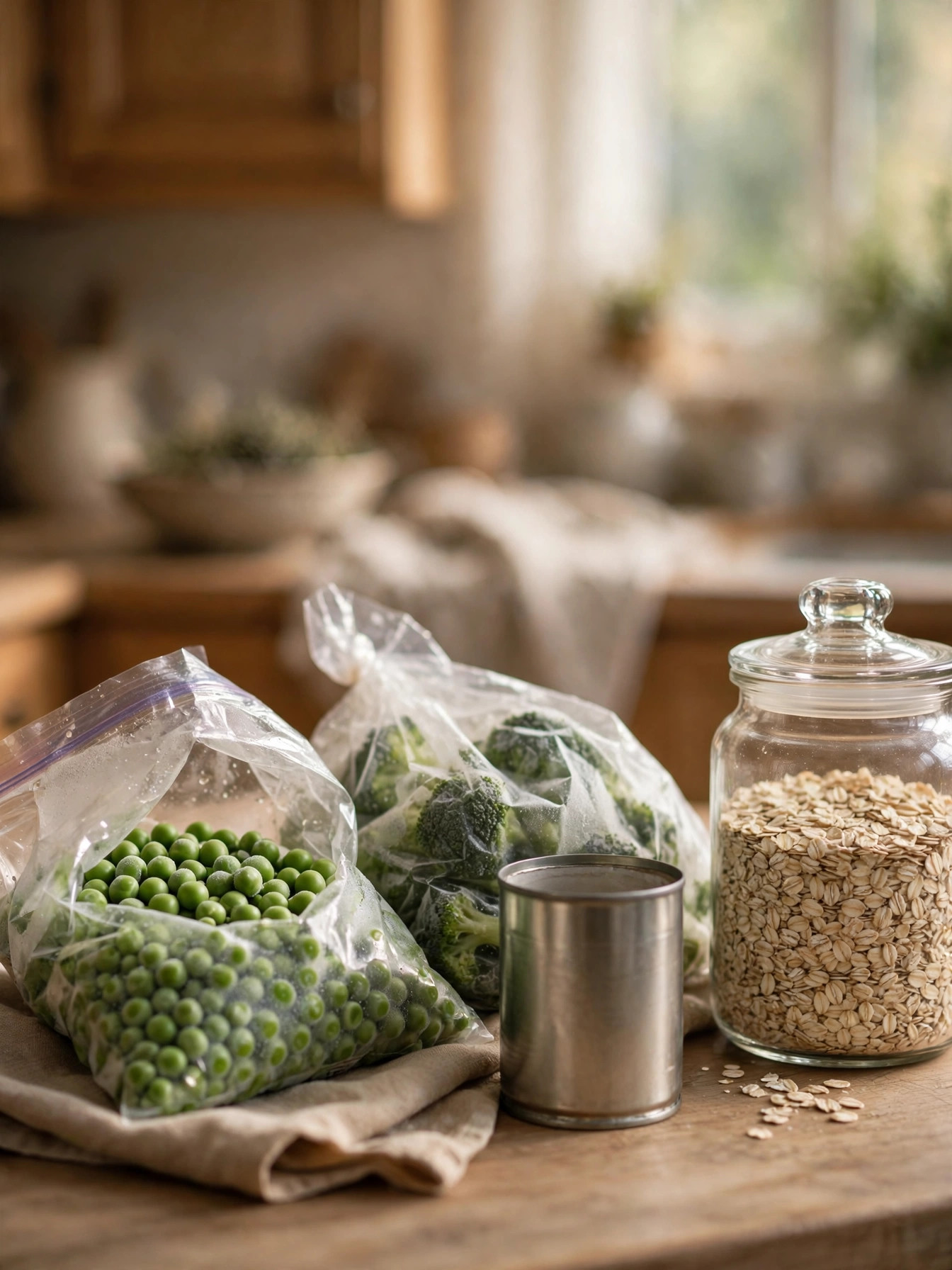
Fresh vegetables go soft in the fridge, and a single person often can’t finish a bag of salad before it wilts. Frozen vegetables solve that: they keep for months, there is no waste, and they are just as nutritious as fresh, frozen soon after picking.
Keep a few bags in the freezer at all times: peas, green beans, broccoli, spinach, and mixed vegetables. They cook in three or four minutes, and they turn a plate of chicken and potatoes into a proper meal.
A pantry that feeds one person well:
- Tinned fish: sardines, tuna, salmon — protein and healthy fats, no cooking, long shelf life.
- Tinned beans and lentils: chickpeas, kidney beans, baked beans — cheap protein and fiber, ready in minutes.
- Eggs: the most versatile single-person food there is. Boiled, scrambled, poached, or in an omelet.
- Oats, whole-grain bread, peanut butter, and nuts: breakfast and lunch sorted, with energy and protein that keep for weeks.
- Long-life milk, frozen berries, and soup stock cubes: for porridge, yogurt, tea, and a dozen quick meals.
With a freezer and a cupboard stocked like this, you are never more than ten minutes from a proper meal — even on a day when you have no energy to shop or cook.
Making mealtimes social where possible
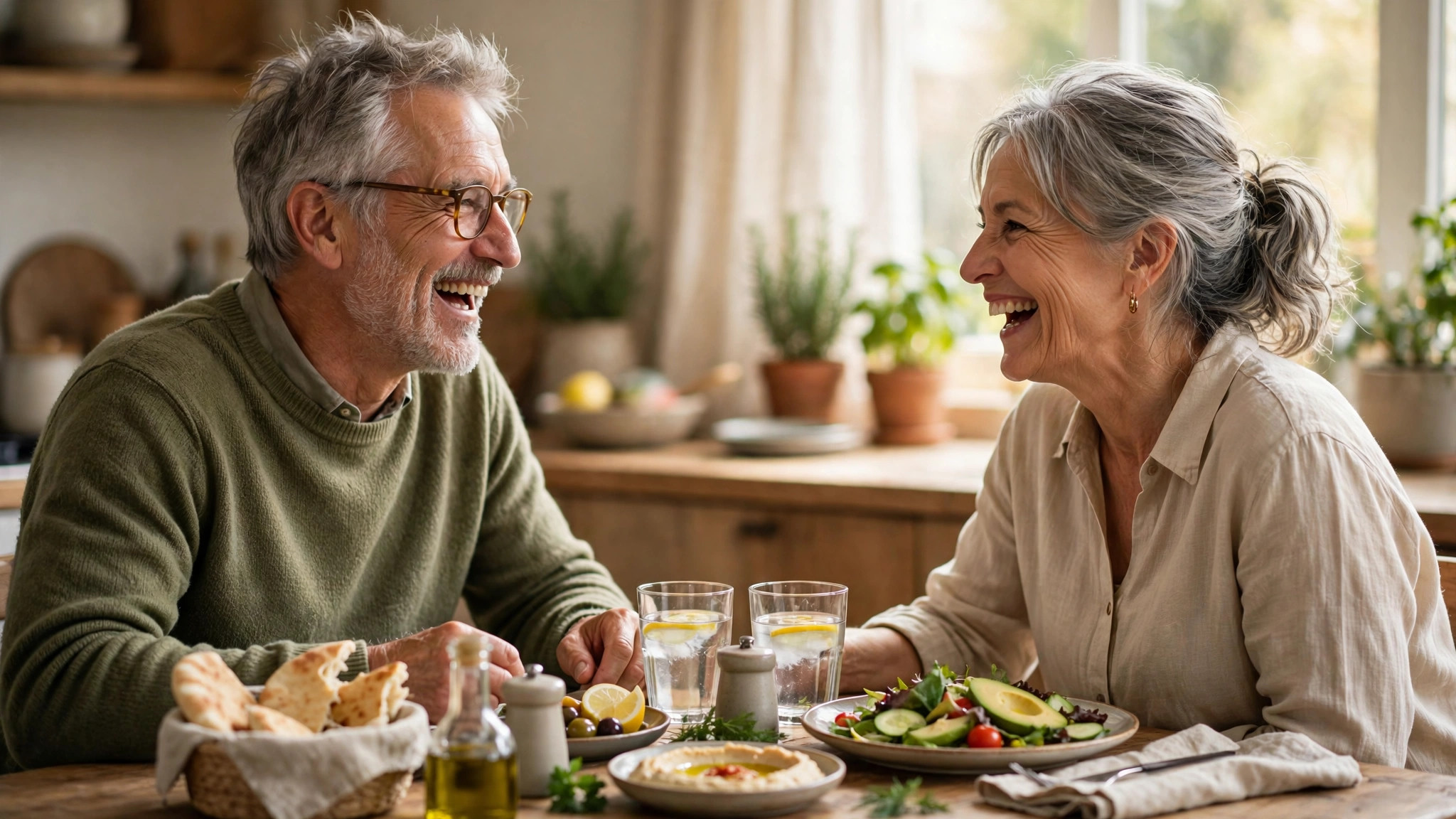
Nutrition is not only about what is on the plate. Eating with other people — even sometimes — tends to mean eating more, eating a wider variety of foods, and actually enjoying the meal. The National Institute on Aging suggests that sharing meals with others can help older adults eat better.
- Cook for a neighbor or a friend once a week — and let them cook for you another day. Two people eating together is a different meal from one person eating alone.
- Join a community lunch. Many churches, community centers, and senior centers run weekly lunches. They are usually inexpensive, the food is proper, and the company is the point.
- Eat with family by video call. Setting a plate at the table and eating “with” a child or grandchild over a video call can restore the rhythm of a shared meal.
If low mood is making it hard to eat at all, that is worth mentioning to your doctor. Appetite loss can be a sign of depression or a side effect of medication, and both can be helped.
When to see a doctor
Most of the advice in this article is about habits, not medicine. But some changes around eating are worth a conversation with your clinician or a registered dietitian:
- Unintentional weight loss — losing weight without trying, especially over weeks or months.
- A big drop in appetite that lasts more than a couple of weeks, or trouble swallowing and chewing.
- Persistent fatigue, weakness, or tingling in your hands and feet — these can be signs of a nutrient deficiency.
- Ongoing digestive problems — constipation, diarrhea, stomach pain, or feeling full after a few bites.
- You take several medications and suspect one of them is affecting your appetite or taste, or you are thinking about a major diet change and you have diabetes, kidney disease, heart failure, or another long-term condition.
A doctor can check for deficiencies with a simple blood test, review your medications, and refer you to a dietitian.
The bottom line
Eating alone does not have to mean eating poorly. The pattern is understandable — appetite shrinks, motivation dips, meals drift — but the fix is simpler than most people expect: one protein food at every meal, a freezer full of single portions, frozen vegetables and pantry staples always on hand, and a shared meal whenever you can manage one. Cook a pot, freeze the rest, sit at the table. Your body will notice the difference long before anyone else does.
Sources
- National Institute on Aging, “Healthy Eating As You Age: Know Your Food Groups” — https://www.nia.nih.gov/health/healthy-eating/healthy-eating-you-age-know-your-food-groups
- National Institute on Aging, “Overcoming Roadblocks to Healthy Eating” — https://www.nia.nih.gov/health/healthy-eating/overcoming-roadblocks-healthy-eating
- National Institute on Aging, “Smart Food Choices for Healthy Aging” — https://www.nia.nih.gov/health/healthy-eating/smart-food-choices-healthy-aging
- NHS, “Eating a balanced diet” — https://www.nhs.uk/live-well/eat-well/how-to-eat-a-balanced-diet/eating-a-balanced-diet/
- Mayo Clinic, “Healthy diet: Do you follow dietary guidelines?” — https://www.mayoclinic.org/healthy-lifestyle/nutrition-and-healthy-eating/in-depth/healthy-diet/art-20046267
- Bauer J. et al., PROT-AGE Study Group, “Evidence-based recommendations for optimal dietary protein intake in older people,” JAMDA 2013 — https://www.jamda.com/article/S1525-8610(13)00326-5/fulltext
This article is for general information only and is not medical advice. Talk to your clinician or a registered dietitian before making major changes to your diet, especially if you have a medical condition or take medication.