Hand Exercises for Arthritis: 8 Gentle Moves to Ease Stiffness and Support Grip
It often starts with small things. A jar lid that once twisted off easily now takes two hands and a towel. Shirt buttons feel fiddly. On cold mornings, your fingers seem slow to warm up — stiff, achy, and uncooperative. If this sounds familiar, you are not alone: arthritis in the hands is one of the most common joint problems after 55.
Here is the good news. Both the Mayo Clinic and the Arthritis Foundation recommend gentle hand exercises as part of managing arthritis symptoms. Done the right way, they can help keep joints flexible, preserve the strength you need for daily tasks, and may even ease pain over time. The key words are gentle and the right way — with arthritic joints, how you exercise matters as much as whether you exercise.
This guide walks through eight evidence-informed hand exercises, the pain rule that keeps them safe, and how to tell a day your hands need movement from a day they need rest.
What hand exercises can (and can’t) do for arthritis
Let’s set expectations honestly. Exercise cannot undo arthritis or rebuild damaged cartilage — no exercise claims to, and you should be wary of anyone who says otherwise. What gentle hand exercises can do, per clinical guidance, is practical and proven-enough to recommend:
- Keep joints flexible. The Mayo Clinic notes hand exercises may improve joint flexibility and range of motion. Stiff joints get stiffer when unused; gentle movement works against that drift.
- Preserve hand strength. Arthritis makes people use their hands less, which causes muscle loss and even less function — a downward spiral that deliberate exercise interrupts.
- May ease pain. The Arthritis Foundation advises that exercising and stretching your hands can keep joints flexible, maintain hand strength, and even reduce pain.
Hand osteoarthritis most commonly affects the base of the thumb, the middle joint of a finger, and the joint closest to the fingertip, says occupational therapist Marie Pace of the UPMC Centers for Rehab Services — and the exercises below target exactly these areas.
The pain rule: when to move, when to rest
Before the exercises, this matters more than any single move. NHS physiotherapy guidance gives a clear rule: move to discomfort, not to pain. A gentle stretch is fine; sharp pain is a signal to stop.
How to read your hands:
- Mild aching afterward is normal. But if aching lasts more than two hours after you finish, you overdid it — do fewer reps and shorter holds next time.
- Sharp or sudden pain means stop. Stop immediately and rest. A splint or brace can protect the joint during daily activities until the pain calms down, then resume.
- Flare-ups need a gentler plan. Red, hot, noticeably more swollen, and more painful than usual means a flare-up. NHS guidance suggests still exercising but with fewer reps and shorter holds — or, on a bad day, resting the joint and trying again tomorrow. Never force movement through a hot, inflamed joint.
- Daily beats intense. NHS guidance recommends exercising every day, even when your hands don’t feel stiff. Consistency matters more than intensity.
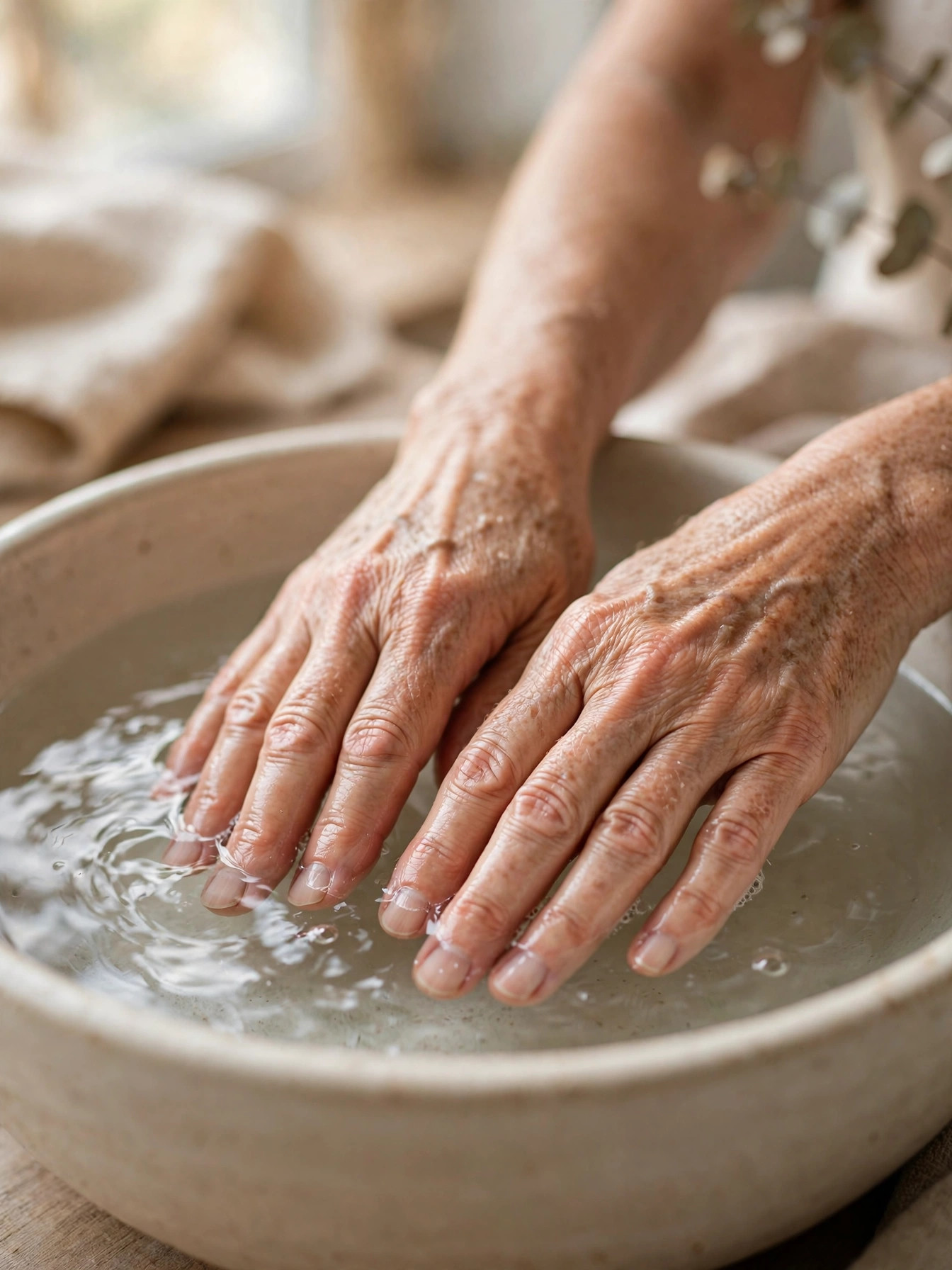
- Warm up first. Wiggle your fingers and make slow, wide hand circles for a minute. Soaking your hands in warm water for a few minutes first also loosens morning stiffness — and if mornings are your worst time, see Morning Stiffness: Why Your Joints Ache When You Wake Up.
One more rule from NHS rheumatology leaflets: don’t worry if you can’t manage the full movement or all the repetitions. What you can do today is enough.
The 8 exercises
Do these slowly and smoothly — no jerking, no forcing. The whole routine takes about five minutes: aim for once a day per hand to start, building to twice a day as the moves feel easier.
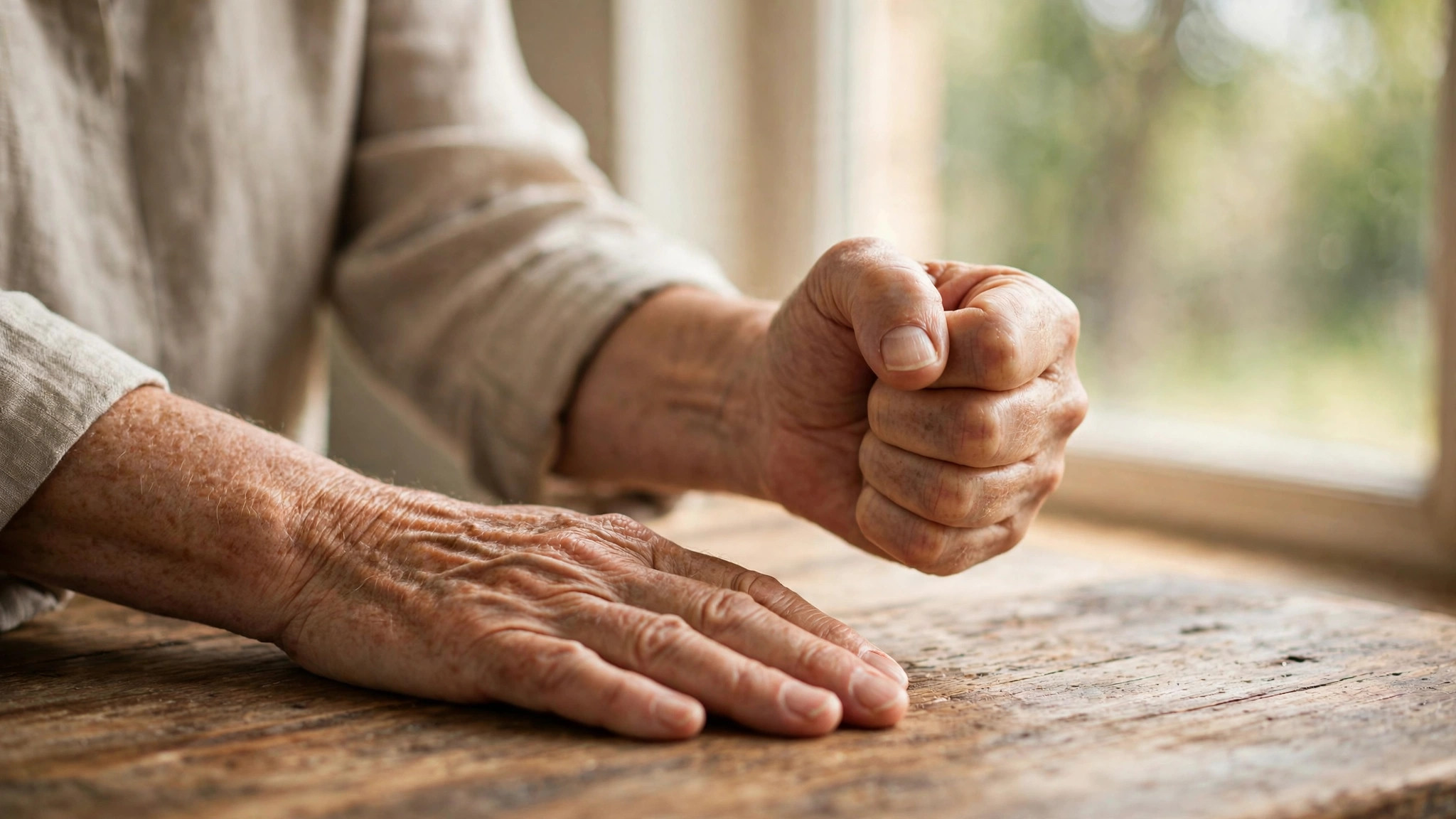
1. Gentle fist (open and close)
How: Hold your hand out with fingers straight, as if giving a handshake — you can rest your forearm on a table. Slowly close your fingers into a gentle fist, wrapping your thumb around the outside of your fingers (don’t squeeze), then slowly open back to straight.
Reps: 10 times per hand (per Mayo Clinic guidance).
Tip: A great all-rounder for morning stiffness — do a few extra before breakfast.
2. Knuckle bend
How: Start with fingers straight and together. Bend just the middle joints of your fingers, keeping your knuckles straight — like the first half of making a claw. Return slowly to the start position.
Reps: 5 times per hand.
Tip: Targets the middle finger joints, a common trouble spot. Move only as far as a gentle stretch allows.
3. Finger spread (tabletop stretch)
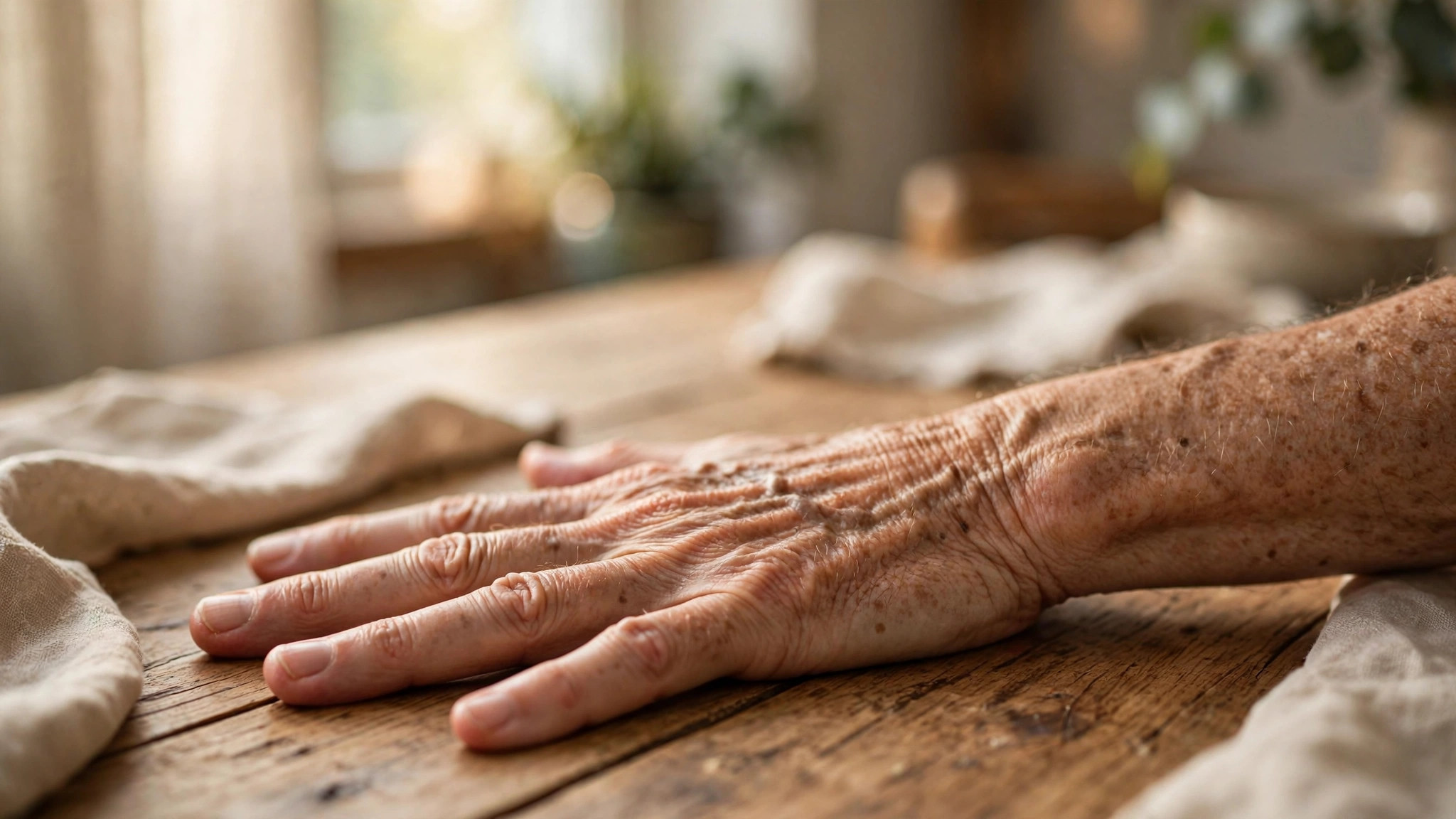
How: Place your hand palm-down on a flat table, fingers together. You can steady your wrist with your other hand. Slowly spread all your fingers — including your thumb — as wide apart as is comfortable. Hold for 5 seconds, then bring them back together.
Reps: 5 times per hand (per Arthritis Foundation guidance).
Tip: The table supports your hand and keeps your wrist honest. This move also stretches the web space between thumb and index finger, which tightens up in many people with arthritis.
4. Fingertip-to-thumb “OK” touches
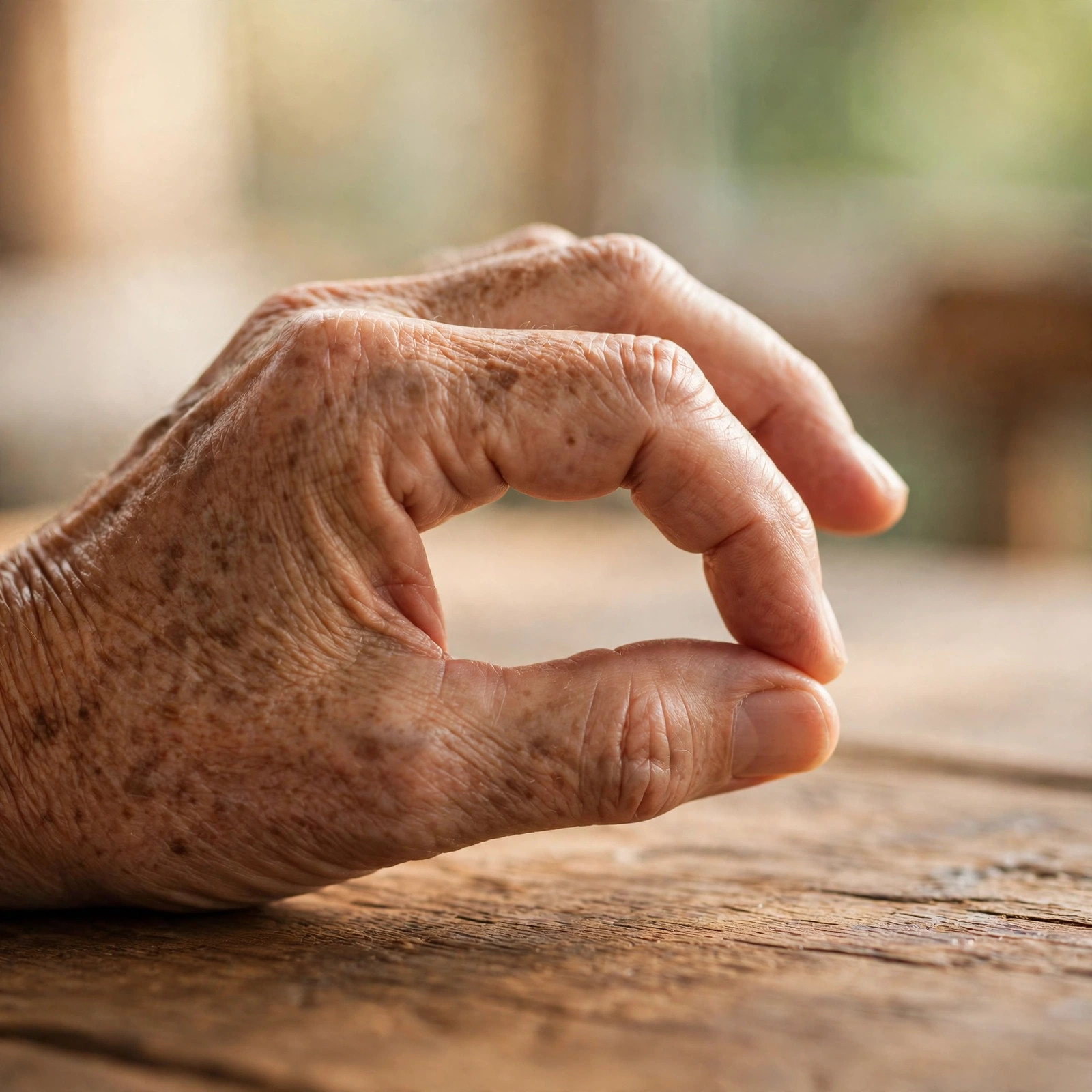
How: Hold your hand in front of you, palm facing you, fingers straight. One at a time, touch the tip of each finger to the tip of your thumb, forming a series of “OK” signs. Keep the other fingers as straight as you comfortably can.
Reps: One full sequence (all four fingers) per hand, repeated 3–5 times. (Per Arthritis Foundation guidance.)
Tip: A dexterity exercise for buttons, zippers, and picking up small objects. If reaching your pinky is hard, just go as far as you can.
5. Thumb across the palm
How: Hold your hand out, fingers straight. Gently move your thumb across your palm toward the base of your little finger — as far as a comfortable stretch allows, no further. Hold for a few seconds, then return.
Reps: 5–10 times per hand.
Tip: The base of the thumb is the single most common site of hand osteoarthritis. Do this one extra gently during a flare-up.
6. Finger lifts
How: Place your hand flat on a table, palm down. Keeping the other fingers flat, slowly lift one finger as high as comfortable. Hold for a second or two, then lower it. Work through all five digits, then switch hands.
Reps: Once through all five digits per hand (repeat the sequence 2–3 times as it gets easier).
Tip: Strengthens the small muscles that straighten your fingers. Don’t let your wrist lift off the table.
7. Wrist circles
How: With your forearm resting on a table (or your arm relaxed at your side), slowly roll your wrist in wide, smooth circles — five clockwise, then five counterclockwise.
Reps: 5 circles each direction per wrist.
Tip: If a full circle hurts, trace a smaller one — partial range still counts.
8. Prayer stretch (wrist flexor stretch)
How: Press your palms together in front of your chest, fingers pointing up, in a prayer position. Slowly lower your hands toward your waist while keeping your palms pressed together, until you feel a gentle stretch in your wrists and forearms. Hold for 5–10 seconds, then release.
Reps: 3–5 times.
Tip: Stop at a stretch, not a strain — feel it in the forearms, not pain in the joints.
Make it a five-minute daily habit
The best routine is the one you will actually do. Do the routine right after your morning warm-water soak (or after a warm shower — your hands are warmest then). If mornings are rushed, attach it to something you already do daily, like waiting for the kettle to boil.
One pass through all eight exercises takes about five minutes. Aim for once a day; twice is a bonus, not a requirement. On swollen days, halve the repetitions; on good days, don’t double them — consistency beats intensity with arthritic joints.
The goal is not dramatic transformation; it is hands that work a little better and complain a little less.
Extra ways to support your hands
Exercises work best alongside a few supporting habits:
- Warmth for stiffness, cold for swelling. Clinicians often recommend heat — a warm soak or warm compress — for morning stiffness and to loosen joints before activity. Cold (a cool pack wrapped in a cloth) is better for acute swelling, since it helps calm inflammation and numb pain.
- Support splints for the thumb. If arthritis at the base of your thumb flares up, a simple splint can protect and support the joint while you go about your day. Your doctor or an occupational therapist can help you choose one that fits.
- Pace your day. Spread hand-heavy tasks through the day in short chunks with breaks, and do the hardest tasks when your hands feel best. Rest is not giving up — it is strategy.
- Eat to support your joints. Some foods are linked to less joint discomfort. See Foods That Help Arthritis Pain: What the Research Shows for what the evidence says.
When to see a doctor
Hand exercises are self-care, not a substitute for medical care. Book an appointment if you notice any of these:
- Swelling that doesn’t settle. A joint that stays swollen for weeks, or swelling that keeps spreading to new joints.
- Deformity or shape changes. Fingers that are visibly drifting sideways, or new hard bumps (nodules) near the fingertip joints.
- Sudden loss of grip. Dropping things you used to hold easily, or a hand that feels weak or “gives way” without warning.
- Hot, red joints. A joint that is warm to the touch and red, especially with fever — this can signal infection or a serious inflammatory flare and needs prompt attention.
- Pain that keeps you from daily life. If pain isn’t improving despite weeks of gentle exercise and self-care, or it is getting worse, ask your doctor about referral to a hand therapist.
- Numbness or tingling. This can indicate a trapped nerve rather than arthritis, and needs a different approach.
The bottom line

Arthritic hands don’t need to be exercised hard — they need to be exercised regularly and gently. Eight simple moves, about five minutes a day, done to the rule of discomfort, not pain: that is the whole program. Warm your hands first, rest during flare-ups, and let a clinician take over if something changes. Your hands have carried you this far — a few minutes a day is a reasonable way to return the favor.
Sources
- Mayo Clinic, “Hand exercises for people with arthritis” — https://www.mayoclinic.org/diseases-conditions/arthritis/in-depth/arthritis/art-20546847
- Arthritis Foundation, “Hand arthritis: 5 ways to ease symptoms” (via ARMC Health Library, July 2025) — https://www.armchealth.org/health-library/story/8a8b4f2d-a816-4d8a-b66e-68c93adff442
- Newcastle Hospitals NHS Foundation Trust, “Hand exercises for inflammatory arthritis” (Rheumatology patient leaflet) — https://www.newcastle-hospitals.nhs.uk/wp-content/uploads/2021/11/Rheumatology-Hand-Exercises.pdf
- Sherwood Forest Hospitals NHS Trust, “Rheumatology Occupational Therapy: Hand exercises” (patient leaflet) — https://www.sfh-tr.nhs.uk/media/bhwjs2hs/pil202411-05-rhe-rheumatology-occupational-therapy-hand-exercises.pdf
- SilverSneakers, “6 Hand Exercises to Ease Arthritis Pain” (with Marie Pace, OT/CHT, UPMC Centers for Rehab Services) — https://www.silversneakers.com/blog/6-hand-exercises-to-ease-arthritis-pain/
- Fam Pract / MDedge, “Exercises for Chronic Osteoarthritis of the Hand” — https://www.mdedge.com/familymedicine/article/25595/rheumatology/exercises-chronic-osteoarthritis-hand
This article is for general information only and is not medical advice. Talk to your doctor or a physical therapist before starting a new exercise routine, especially if you have arthritis or another joint condition.